The Future of SIV

Joanna Schroeder

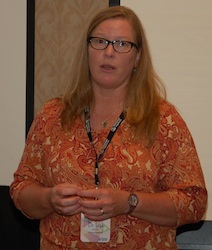
What is the future of SIV, or swine influenza virus? While most don’t know the path SIV will take for sure, Dr. Marie Culhane may be a better predictor of both due to her work on SIV. Dr. Culhane is an associate clinical professor with the University of Minnesota Veterinary Diagnostic Laboratory and she gave a presentation on the Future of SIV during the Swine Link networking event July 13 in Des Moines, Iowa hosted by Boehringer Ingelheim.
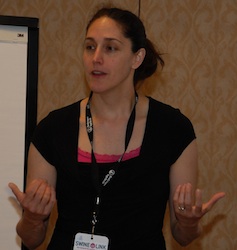
Dr Marie CulhaneDr. Culhane said she refers to SIV as the flu because influenza virus is a shared virus between humans, and animals. The viruses go back and forth so to designate the flu as a swine only virus is untrue.

During her presentation, Dr. Culhane began by giving an overview of SIV, and noted that the flu goes back hundreds of years and in the U.S. discovered influenza in around 1918 and was a normal virus that caused respiratory problems in pigs. However, in 1998 a new virus was introduced into pigs, H3N2. This virus came after H1N1 and since then, the two viruses co-infected pigs and started to exchange genetic components of the virus, or reassorting.  This has caused a lot of changes in viruses and pigs and thus a need for new vaccines.

Because of the challenges with the new viruses, Dr. Culhane said there has been a lot of collaboration and the industry has learned a lot. She touched on this during her presentation and also gave some tips for producers to help keep the flu from affecting their pigs and also some tips on treatment if their pigs come down with the flu.

Listen to my interview with Dr. Marie Culhane here: Thoughts on SIV

Listen to Dr. Marie Culhane’s presentation here: The Future of SIV

Check out the photos from the event in the Swine Link photo album.
Audio, Boehringer Ingelheim, Pork, Swine

Good Drainage Key to Managing Watershed Runoff

John Davis

ctic-13-phil-algreenOn the recent Conservation Technology Information Center tour in Livingston County, Ill., we’ve talked a lot about nutrients draining into the local watershed and how to prevent that. Part of that formula includes controlling any water drainage from the land, and Phil Algreen with Agri Drain, a company that specializes in drainage management, talked to the crowd about some of his company’s products.

“Well, the main thing we use to [manage drainage] is called a water level control structure, a device you put on a tile main outlet [that allows] you to control [at one spot] the water table in that area affected by that tile,” adding that it is seasonally adjustable — less drainage in the winter and summer and maybe more in the spring when you’re trying to plant a crop.

But Phil talked bigger picture with the folks on the CTIC tour, explaining how their systems are not necessarily good for every situation and how they are mostly built for the flat topography of an area like Livingston County, Ill.

“But there are other practices besides drainage management we talked about: saturated buffers, wood-chip bioreactors… different things you can do, depending on the area where you live. Kind of like tools in a tool box. You’ve got to pick the right one.”

You can listen to Chuck’s interview with Phil here: Interview with Phil Algreen with Agri Drain

2013 Conservation in Action Tour Photo Album

Ag Groups, Agribusiness, Audio, Conservation, CTIC

Cheese and Wine Pairings to Rave About

Joanna Schroeder

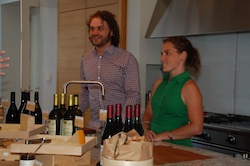
This past weekend I attended Swine Link, a networking event held by women for women in the swine industry and sponsored by Boehringer Ingelheim (BI). Joined by several swine vets and swine marketers and brand managers, the first day the group was hosted by Meredith Publishing and on Saturday night, the attendees were treated to a Wine and Cheese Pairings. Put together by C.J. and Kari Bienert,owners of The Cheese Shop located in Des Moines, Iowa.

The Cheese Shop TeamThe Bienert’s put together three pairings featuring cheese produced by local Iowans. The first cheese was produced by Reichert’s Dairy Air located in Knoxville, Iowa and called Robiolina Di Reba (my favorite) along with a red wine called Sattler from St. Laurent, Austria. To add a flavor twist, the cheese and wine was paired with Portobello Mushroom Relish produced by American Spoon.

The second pairing featured an Aged Prairie Rose cheese produced by Milton Creamery in Milton, Iowa. The cheese was paired with Caymus a white wine produced in Conundrum, California and Pickled Apricots produced by Boat Street.

The final pairing featured an aged gouda produced by Frisian Farms in Okaloosa, Iowa paired with fig and black tea preserves produced by Quince and Apple and featuring a red wine called Domain De Girasols, produced in Rasteau, Cotes Du Rhone Village.

All the products featured can be purchased at The Cheese Shop. BI plans on hosting more Swine Link events throughout the year, so keep your eye out for news about upcoming events.

Check out the photos from the event in the Swine Link photo album.

Boehringer Ingelheim, Pork, Swine

Zimfo Bytes

Talia Goes

    Zimfo Bytes

  • Southern States Cooperative announced a new Agronomy Business Unit to better serve the needs of core agricultural customers.
  • On September 28, 2013, the American Royal Association will host the 88th annual American Royal Parade, featuring a Star-Spangled Salute to the U.S. Military and Midwest agrarian values.
  • The Animal Agriculture Alliance released a report which chronicles observations from the 32nd annual 2013 Animal Rights National Conference presented by The Farm Animal Rights Movement (FARM).
  • The nation’s dairy farmers have pooled their resources together through the national dairy checkoff program to create dairygood.org, a dairy newsroom.
Zimfo Bytes

Biosecurity – PEDv Update

Joanna Schroeder

BIsw13-becton-npbWonder what is happening with biosecurity in the swine industry? You can get the 411 from Dr. Lisa Becton, director of swine health information for the National Pork Board, who gave an in-depth presentation during Swine Link sponsored by Boehringer Ingelheim. Becton discussed biosecurity as it relates to PEDv or the porcine epidemic diarrhea virus. PEDv was first confirmed in the U.S. earlier this year.

During the presentation, Dr. Becton gave an overview of PEDv, the actions to manage PEDv and some of the recommendations that have come about. She also discussed the current status of both the epidemiology survey that ASV is doing and some of the ongoing research.

She also noted that PEDv is not a new virus, nor is it a regulatory/reportable disease. Since PEDv is widespread in many countries, it is not a trade-restricting disease, but rather a production-related disease. PEDV may appear clinically to be the same as transmissible gastroenteritis (TGE) virus with acute diarrhea. She said it is very important to adhere to strict biosecurity protocols when dealing with the disease.

Listen to Dr. Lisa Becton’s presentation on PEDv here: Biosecurity - PEDv Update

Check out the photos from the event in the Swine Link photo album.
Audio, Boehringer Ingelheim, Pork, Swine

CTIC is Good Way to Show Good Practices

John Davis

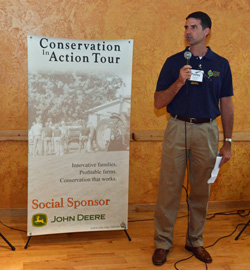
ctic-13-pauley-bradleyThe latest Conservation Technology Information Center tour in Livingston County, Ill., has been a good way for the farmers of that region to showcase what they are doing to be good stewards of the environment, while making sure they maintain a good bottom line. Pauley Bradley with John Deere and a member of the CTIC is shown welcoming everyone to the opening reception sponsored by John Deere. He said this is the third year CTIC has been involved in the Indian Creek watershed project that shows how to balance good stewardship with good economics.

“The goal was to get at least half of the producers in the watershed as part of the initiative to do everything they could on the land to improve water quality in the area. We’ve got more than 40 percent participation right now, which is tremendous, [with] a lot of collaboration and a lot of folks pulling in the same direction,” Pauley said, adding that it was heartening to see capacity crowds on the tour, with many of those from the city able to see for themselves the good practices going on. “I talked to Dr. Norm Widman who’s the national agronomist from NRCS last night, and he said, ‘You know, we just have to get out of town, away from the concrete buildings and get grounded every once in a while.’ ”

Pauley went on to say he was quite pleased to see how much information they could pack into the days of this tour.

You can listen to Chuck’s interview with Pauley here: Interview with Pauley Bradley, John Deere and a member of CTIC

2013 Conservation in Action Tour Photo Album

Ag Groups, Agribusiness, Audio, Conservation, CTIC, John Deere

Podcast Tell the Story of Iowa Ag During RAGBRAI

Joanna Schroeder

The annual Des Moines Register’s Great Bike Ride Across Iowa (RAGBRAI) is just around the corner and this year riders can learn about Iowa agriculture through a series of podcasts, coined “Iowa Agcasts“.

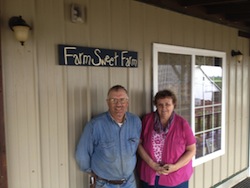
Farm Sweet Farm Iowa Agcasts“The beauty and fertility of Iowa’s land is very evident this time of year and these podcasts will highlight the importance and diversity of Iowa agriculture as riders travel across the state,” said Iowa Secretary of Ag Bill Northey. “Agriculture is so important to our state and we hope RAGBRAI participants and others will listen to these podcasts and learn more about all that is happening on the farms across Iowa.”

The Iowa Department of Agriculture and Land Stewardship, together with many partners, created one podcast for each leg of the ride.  Each podcast has an interview of one or two local individuals involved in agriculture and soil and water conservation.

The podcasts are unique in that they show the diversity of Iowa’s agriculture.  Listeners meet a farmer who sells at his local farmer’s market, another who farms organic and even hear from a family-owned winery.  Other stories come from beekeepers to coal mine experts, all with roots deep in Iowa’s landscape. Urban conservation is even discussed as the riders reach Des Moines half way through the week.

“Agriculture is a very big part of what we do. You see it spatially out there as you look across the landscape and economically as well. It’s one of the biggest industries in the state and if you include not only the actual farming but the folks that produce things for farmers or process the crops, somewhere around 25-30% of the economic activity in Iowa is based in agriculture,” Northey states in his introductory podcast.

Uncategorized

Farmer Appreciates Crowds, Support on CTIC Tour

John Davis

ctic-13-mike-trainorGood crowds from around the area and many parts of the country turned out for last week’s Conservation Technology Information Center tour in Livingston County, Ill., and that was appreciated by the local farmers.

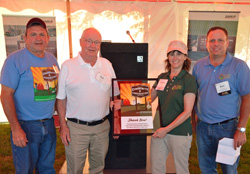
“Today we had a lot of people here. When you go to all that work, and you put these plots in, and you try to figure out what’s right and what’s wrong, to see this many people come in on our farm and see what we’ve done, it kind of gives you a real good feeling about what you do,” said Mike Trainor the host at the Trainor family farm, one of the stops on the CTIC tour, and a certified Crop Adviser and a registered USDA technical service provider. He’s in the picture with his dad, Jack Trainor, getting an appreciation award for letting CTIC come to the family farm.

Mike said with pricey inputs, it makes economical and ecological sense to make sure they don’t runoff.

“As expensive as the inputs are, we need to figure out how to put ’em there, how to keep ’em there, and how to best utilize ’em.”

Mike said it’s also rewarding to be recognized by the federal regulators at the EPA that farmers like him are trying to do what’s best for the environment. He said even without the feds, it’s important for them to be able to pass this operation down to the next generation of farmers in the family.

“We’re all in it together, and we want it to be profitable for them down the road and good for the environment.”

You can listen to Chuck’s interview with Mike here: Interview with Mike Trainor, Trainor Farms

2013 Conservation in Action Tour Photo Album

Ag Groups, Agribusiness, Audio, Conservation, CTIC, Environment

CTIC: Using Cover Crops to Boost Yields

John Davis

ctic-13-mike-plumerGetting the most out of what you’ve got is a goal that most producers have, and during last week’s Conservation Technology Information Center tour in Livingston County, Ill., the value of using cover crops to boost a bottom line was shown. Mike Plumer is a retired University of Illinois Extension educator in agriculture and natural resources and currently a consultant for conservation agriculture, in particular, cover crops. He made a presentation to the group about the value cover crops can add.

“We’re seeing a lot of benefits,” Mike said. “One, we’re capturing nitrogen, holding that nitrogen so we don’t lose it, we’re increasing root infiltration so we get more water movement in the soil, we’re adding more biological activity, we’re adding organic matter to the soil, and as a result, we’re typically seeing yield increases.”

Mike echoed the sentiments of other speakers who showed that cover crops can help save yields, especially during drought years, and pointed to one farmer who told him his yields were 50 bushels an acre better where he had a cover crop.

During one stop on the CTIC tour, Mike discussed several different options in cover crops and how to use each of them.

You can listen to Chuck’s interview with Mike here: Interview with Mike Plumer, cover crop specialist

2013 Conservation in Action Tour Photo Album

Ag Groups, Agribusiness, Audio, Conservation, CTIC

Two Chicks From the Sticks

Joanna Schroeder

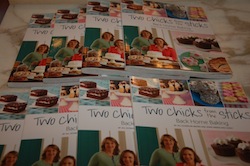
Two Chicks from the SticksBoehringer Ingelhiem held a Swine Link networking event in Des Moines, Iowa this weekend, for women from around the country working in the swine industry. During the first day, the group hung out at Meredith Publishing, the home of the famous test kitchens. While there the ladies were treated with a cooking demonstration from one of the authors of the cookbook, Two Chicks from the Sticks.

The best selling cookbook was originally published by Meredith and authored by best friends, Jill Means and Jamie Greenland.

Jill Means author Two Chicks from the SticksJill, who lives in Des Moines, gave the group a cooking lesson and the featured dessert: a 4th of July tart. It was fabulous. While I’m traditionally lazy in the kitchen, I felt quite inspired by Jill’s lesson and I learned some cooking terms I’d always wondered about and also learned why certain things are done certain ways, for example why you should crack your eggs in a separate bowl before adding then to your ingredients.

The cooking demonstration set a great table for the group to get to know each other better while eating great food. The cookbook is available now and you can purchase it here.

Check out the photos from the event in the Swine Link photo album.

Boehringer Ingelheim, Pork, Swine