Senate Ag Hearing Reaffirms Safety of GMOs

Jamie Johansen

safe affordable foodThe Senate Agriculture Committee held a hearing this week that showcased the overwhelming scientific consensus regarding GMO safety, as well as the urgent need for Congressional action to pass a reasonable, common-sense solution that prevents a state-by-state patchwork of labeling laws.

“Today’s hearing confirmed that GMOs are safe; a state-by-state patchwork of labeling laws will have dire consequences for farmers, businesses and consumers; and the urgency for Congress to prevent these problems by passing a uniform national law,” said Coalition or Safe Affordable Food (CFSAF) spokesperson Claire Parker.

Senators from both parties spoke to the importance and safety of biotechnology and the need for a single national food labeling standard. Chairman Pat Roberts (R-KS) began the hearing by stating that “agriculture biotechnology has become a valuable tool in ensuring the success of the American farmer in meeting the challenge of increasing yield in a more efficient, safe, and responsible manner.”

Ranking Member Debbie Stabenow (D-MI) said, “I share the concern of doing business if 50 different states have 50 different standards and quite frankly, it wont work.” Senator Stabenow also said she hopes the Senate can “work together to develop a bipartisan bill that can pass the Senate by the end of this year.”

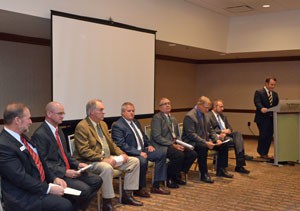
Wednesday’s hearing began with a panel of experts from the U.S. Department of Agriculture, Environmental Protection Agency, and the Food and Drug Administration offering testimony that reaffirmed the safety of GMOs.

Following three hearings in the U.S. House of Representatives, this is the fourth time in the past 12 months where expert witnesses have confirmed the science and safety of biotechnology.

The Senate hearing comes less than ten months from the July 1 effective date of Vermont’s labeling mandate, which will be the first state to implement its own unique food labeling standard. Though Vermont’s law is currently being challenged in federal court, there is little chance of a judicial resolution in time to prevent the negative impacts of the misguided statute.

It it increasingly clear that a bipartisan solution is attainable. In July, the House of Representatives passed its own bill that creates a single, national labeling standard, as well as a GMO-free certification program that assures consumers who prefer to purchase non-GMO foods have a consistent, transparent means of identifying those products. That legislation passed by a 275-150 vote with support of 45 Democrats. The hearing provided plenty of evidence that similar bipartisan compromise is within reach in the Senate.

Ag Groups, Food, GMO

Sun Going Down On An …

Melissa Sandfort

image000000Today Aunt Jeanette writes:

No, this isn’t an L.A. freeway! Sorry, Brooks and Dunn, I will take the sun going down behind our farm any day.

Our neighbor/friend took this picture from across the section while she was going for an evening walk. I thought it was a gorgeous picture! It gives me a peaceful, relaxed feeling that comes from living on a farm. It also reminds me how fortunate I am to live where I do, and how lucky I am to have friends that share their pictures. There’s not much else to write. The picture says it all.

Thank you Megan Kucera for the wonderful photo.

Until we walk again …

Uncategorized

Ad Says Chipotle Food Contains Dihydrogen Monoxide

Jamie Johansen

Screen Shot 2015-10-21 at 8.44.34 PMThe Center for Consumer Freedom continued its Chubby Chipotle campaign against Chipotle’s food misinformation with a new “Dihydrogen Monoxide” ad in the New York Post. The ad calls out Chipotle for scaring the public and tricking people into thinking its burritos are healthier by advertising its meat as being “antibiotic-free,” meaning from animals raised without antibiotics.

But Chipotle is trying to have its pork and eat it, too. This year the burrito chain began sourcing pork from Europe that comes from animals that may have been given antibiotics.

The instance is one more example of Chipotle deception and attempts to abuse consumers’ lack of familiarity with food production. The use of antibiotics is strictly controlled by federal regulations. If a farmer uses antibiotics to prevent or treat sickness in an animal, regulations ensure that food from that animal is safe. The federal government mandates a withdrawal time for drugs so that animals can eliminate them from their bodies. The government conducts random testing of meat to ensure safety, and can stop meat from being sold that doesn’t pass muster. As veterinarian Dr. Scott Hurd has put it in regards to meat: “It’s all antibiotic free.” Even Chipotle now admits this—on its website, after running misleading ads that scare consumers.

“Consumers shouldn’t let Chipotle trick them into thinking their burritos are healthier by saying they’re antibiotic-free, because federal regulations are designed to ensure all meat served in restaurants and sold in supermarkets is antibiotic-free,” Will Coggin, director of research at the Center for Consumer Freedom, said. “Chipotle not only denigrates U.S. farmers who humanely use antibiotics to prevent or treat illness, but it uses scare tactics to take advantage of consumers.”

Ag Groups, Food

Dr. Channaptna Prakash Accepts CAST Award

Joanna Schroeder

Dr. Prakash accepting award with Dr. Srnic, DuPont representative.

Dr. Prakash accepting award with Dr. Srnic, DuPont representative.

This year’s winner of the Borlaug CAST Communication Award was Dr. Channapatna Prakash, who gave a keynote presentation during the award ceremony entitled, “Everything I Know about GMOs, I Learned on Social Media”. Currently the Dean of the College of Arts and Sciences at Tuskegee University, Prakash was instrumental in establishing the prestigious plant biotechnology research and training program at the school, and he has a long list of influential publications and awards. He has presented his messages about agriculture in more than 70 countries.

Each year, CAST awards a science and/or agriculture expert who demonstrates an great ability to communicate messages through various media platforms. Colleagues say that he can communicate with “every kind of audience, in every medium available.”

The October 14 morning session began with short remarks by CAST EVP Kent Schescke and DuPont Pioneer Research Director Wendy Srnic. Julie Borlaug Larson of the Norman E. Borlaug Institute for International Agriculture spoke about Dr. Borlaug’s legacy, and CAST President David Songstad introduced the award winner.

Dr. Prakash’s presentation centered on the challenges scientists and the agricultural community have when dealing with modern media. Prakash used thought-provoking images and personal anecdotes to emphasize the need for innovative science. He also encouraged the use of effective “hands on” education. “Knowledge is important,” he said. “We need to rekindle curiosity and wonder in our young people.”

Agribusiness, Education, World Food Prize

RFD-TV Lobbies for Media Merger

John Davis

RFDTVRFD-TV executives are lobbying government officials in Washington, D.C., to approve a merger that will see the network on more cable providers. In this news release, RFD-TV points out that Charter Communications, which has a pending merger with Time Warner and Brighthouse cable networks, has a proven track record of supporting rural, independent programming, and the rural network now enjoys full distribution in all Charter systems nationwide, both in standard and high definition.

By contrast, only 4% of Time Warner and Brighthouse cable customers currently enjoy RFD-TV due to lack of carriage in most areas of the country and/or placement of RFD-TV on obscure tiers. Since March 2014, RFD-TV has been out of contract with both Time Warner and Brighthouse, who have been unwilling to negotiate in good faith to increase distribution of rural, independent programming.

“Rural America recognizes that its best opportunity to reconnect city with country again is to have Charter Communications control access to the urban homes currently being served by Time Warner Cable and Brighthouse systems,” stated Patrick Gottsch, founder and president of Rural Media Group, Inc. “This is a totally different situation compared to the previous takeover attempt as roles are reversed with the smaller rural cable company merging with the larger urban clustered entities.”

In support of the merger, RFD-TV submitted comments to the FCC.

Media

Role Model for Women in Agriculture

Kelly Marshall

2015 Drive to Thrive contest grand prizewinner, Krista Lottinville (PRNewsFoto/Syngenta) Krista Lottinsville is the grand prize winner of Syngenta’s Drive to Thrive contest.  The contest asked growers to describe how agriculture drives their communities to thrive.  Lottinville won the challenge with her essay and video submission describing how agriculture nurtures the talents of young women with leadership skills and how it helped her grow professionally.

“I love agriculture, and I want young women everywhere to love it too,” she said. “It’s an industry that thrives, in part, because of the community of women who are committed to creating more opportunities for female students and other young leaders. I am so excited and very honored by this win, and I greatly appreciate the recognition and support from Syngenta.”

Earlier this year, Syngenta posted the 10 best Drive to Thrive entries, as determined by a panel of judges, onto its Thrive website and invited visitors to vote for their favorite. Based on online voting and the quality of her essay, Lottinville was named the grand prizewinner of a $500 gift card, which she has decided to donate to Women Changing the Face of Agriculture (WCFA). This outreach and leadership development project, initiated by Illinois Agri-Women (IAW), gives young women the opportunity to explore different career paths offered in the agriculture sector. Syngenta also will make a $1,000 donation to WCFA in Lottinville’s name.

“Krista is a role model for all of us in agriculture,” said Kelsey Vance, retail sales representative for Syngenta, who works with Lottinville through IAW and WCFA. “She is super involved and always willing to take on more responsibility to promote women’s leadership in agriculture. We’re proud to support her.”

You can read more about Lottinville and watch her video on the Drive to Thrive website.

Agribusiness, Syngenta

USDA Names New Deputy Under Secretary

Jamie Johansen

USDAAgriculture Secretary Tom Vilsack announced Lanon Baccam as the USDA Deputy Under Secretary for Farm and Foreign Agricultural Services, overseeing the Farm Service Agency and Risk Management Agency, and the USDA’s Military Veterans Agricultural Liaison. Baccam is a U.S. Army and Iowa National Guard veteran and replaces Karis T. Gutter.

“Throughout his career in military and public service, Lanon has demonstrated a strong commitment to expanding opportunity in rural communities. Lanon brings to his new position strong management skills and a deep knowledge of USDA programs, policies and priorities. His leadership skills will be invaluable to USDA and rural communities across the nation,” said Vilsack.

Baccam, a native of Mount Pleasant, Iowa, is a military veteran and spent eight years in the U.S. Army and Iowa National Guard and was deployed to Afghanistan in 2004-2005. During his time in the Army, Baccam held leadership roles as a unit movement officer and served as a combat engineer in charge of explosive demolitions. Baccam previously served as the director of scheduling and advance in the Office of the Secretary at USDA. Prior to his role as director, Baccam served as a special assistant in the Foreign Agricultural Service and as executive assistant to the Secretary. Prior to joining USDA, Baccam worked in the Iowa state government and for several state and national political campaigns.

“Lanon was my top choice for this position. He is a flexible, capable leader who will bring a strategic, innovative approach to implementing USDA’s priorities and goals. I believe he will do an outstanding job on behalf of farmers, ranchers and rural communities as the Deputy Under Secretary for Farm and Foreign Agricultural Services,” said Agriculture Under Secretary for Farm and Foreign Agricultural Services Michael Scuse.

Ag Groups, USDA

Young Ag Journalists Develop Leadership in New Zealand

Kelly Marshall

Young Journalists 1 Ten young ag leaders representing ten countries are gathered in New Zealand to continue to develop their leadership skills and further their professional development in ag journalism.  The International Federation of Agricultural Journalists (IFAJ) boot camp is sponsored by Alltech and provides the journalists with opportunities for presentations, interactive group sessions, and even a visit to a local dairy.

Matthew Smith, Alltech vice president of Asia-Pacific, presented “Agribusiness leadership today and tomorrow,” encouraging the delegates to be different and break the mold. “Leaders should not think outside the box; they should get rid of the box altogether,” said Smith.  Smith also stressed that agricultural journalists must travel for a truly international perspective that they can then share with their readers, listeners and viewers, whose livelihood is highly influenced by global activities. “Our industry is global—there are no borders,” he advised, challenging the journalists to think outside of their individual countries and look for the bigger stories.

Young Journalists 2Winners of this year’s IFAJ-Alltech Young Leaders Award Candace Weeda (USA) pictured right, Trevor Bacque (Canada) pictured left, Brett Worthington, (Australia), Christian Erin-Madsen (Denmark), Andrea Bergman (Finland), Ewald Wurzinger (Austria), Doerte Quinckhardt (Germany), Ben Pike (United Kingdom), Mary Phelan (Ireland), and Camilla Olsson (Sweden).

Candidates were selected based on a written submission, leadership potential, proven leadership abilities and a narrative of their interest in the program.  The boot camp is now in it’s 11th year and more than 100 journalists have come through the program.

“As part of its global strategy, IFAJ is taking new measures to unite colleagues from around the world,” said Owen Roberts of Canada, IFAJ vice-president. “With Alltech’s help we are mobilizing the agricultural journalism profession, an essential link in the knowledge translation and transfer chain for farmers everywhere.”

The young leaders’ program is held jointly with the IFAJ-DuPont Pioneer Master Class prior to the IFAJ congress.

Agribusiness, Alltech, Journalism

USDA Releases Farm to School Program Data

Kelly Marshall

USDAData from the 2013-2014 school year for the USDA’s Farm to School Grant Program has been released.  The results show that a strong farm to school program encourages students to purchase breakfast and lunch at school, increases students positive food choices, and reduces waste.  The census also showed a 55 percent increase in the amount of food purchased locally by school districts from 2011-2012, up to nearly $600 million last school year.

The results are an outcome of efforts by the U.S. Department of Agriculture, under Secretary Vilsack’s leadership, to target resources to help schools serve healthier meals to students following the passage of the bipartisan Healthy, Hunger-Free Kids Act of 2010. Through its Farm to School Grant Program, established and funded through the Act, USDA offers grants to help schools and other eligible entities establish or expand farm to school programs. In September 2015, USDA released a report that shows that the grants alone have helped 12,300 schools improve nutritious meal options made with local ingredients for 6.9 million students, while expanding market opportunities for family farmers and ranchers in their communities.

“Farm to school is one of many tactics and resources that USDA makes available to help schools successfully serve healthier meals to kids. Farm to school partnerships have a proven track record of encouraging kids to try, like and eat more healthy foods and creating new market opportunities for the farmers that grow them,” said Vilsack. “Congress should act quickly to reauthorize the Healthy, Hunger-Free Kids Act to build on the success of farm to school and the healthier school meals and continue our momentum towards a healthier next generation of Americans.”

With program trends up and continuing to grow, the school districts provide farmers with a business opportunity.  It also encourages a link between the farm and classroom with hands-on activities and field trips.  Independent research and testimony from school personnel show these interactions improve a student’s healthy eating habits, specifically the consumption of more fruits and vegetables and less plate waste.

Education, Food, USDA

Hunger Levels Remain High in 52 Developing Nations

Joanna Schroeder

Global Hunger IndexThe World Food Prize and Borlaug 101 Dialogues was a place for global leaders to gather and come together to solve the problems of world hunger as well as how to safely and nutritiously feed the growing worldwide population. During the event, the International Food Policy Research Institute, Welthungerhilfe and Concern Worldwide released the 2015 Global Hunger Index (GHI) and found that while the hunger level is down 27 percent since 2000 in the developing world, hunger levels remain “serious” or “alarming” in 52 developing countries. The Central African Republic, Chad, and Zambia had the highest hunger levels in the report.

The report showed that conflicts can be strongly associated with severe hunger and the reports focal point of interest was armed conflict and the challenge of hunger. The report found the countries with the highest and worst GHI scores tend to be those engaged in or recently emerged from war. The two worst-scoring countries both experienced violent conflict and political instability in recent years. In contrast, in Angola, Ethiopia, and Rwanda, hunger levels have fallen substantially since the end of the civil wars of the 1990s and 2000s.

“War and conquest have long been the drivers of mass starvation. Although humanitarian responses are far faster and more proficient than in the past, we still need to attend to the perils of armed conflict and inhumane policies generating severe hunger,” said Alex de Waal, author of the essay and executive director of the World Peace Foundation and research professor at Tufts University. “The world has enough food, enough logistics, enough knowledge, to end severe hunger: achieving that is a matter of political will only.”

Another focus of the report were areas of success and programs that are working well to end world hunger. The level of hunger in developing countries has fallen by 27 percent since 2000, and 17 countries reduced their hunger scores by at least half since 2000. Among those countries are Azerbaijan, Brazil, Croatia, Mongolia, Peru, and Venezuela. Some of the world’s poorest countries could not be included in the report due to unavailable data. As a result, the picture of global hunger may be worse than reported here.

Global hunger is a continuing challenge with one in nine people worldwide chronically undernourished and more than one quarter of children too short for their age due to nutritional deficiencies. Nearly half of all child deaths under age five are due to malnutrition, which claims the lives of about 3.1 million children per year.

Food, World Food Prize