Zimfo Bytes

Talia Goes

Zimfo Bytes

Zimfo Bytes

Scott Walker Addresses #DairyStrong

Lizzy Schultz

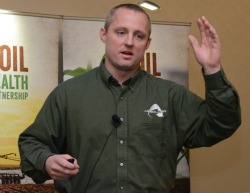
DS16_WalkerPhoto The second annual Dairy Strong conference, held earlier this month in Madison, Wisconsin, began its first full day with an opening address from Wisconsin Governor Scott Walker.

Though the Dairy Strong conference is internationally attended and focuses on global collaboration, there is no denying that Wisconsin is one of the dairy industry’s shining stars. Walker’s speech highlighted the value of Wisconsin’s dairy industry, which represents over half of the state’s 80 billion dollar agriculture sector.

“Florida makes a big deal about their oranges, and they should. Oranges contribute 9 billion dollars to Florida’s economy,” Walker said in the address, “but our dairy industry contributes over 40 billion dollars to the economy of Wisconsin annually, and that is something to brag about.”

Walker also addressed a worrisome trend that many agriculture professionals know too well: The demand for quality producers, as well as the necessary food supply, is continuing to increase, and so is the average age of the American farmer.

“It is paramount that we get our youth more involved in agriculture,” he said. “We need to work harder to get the message out to students, at the state’s three agriculture colleges as well as at the K-12 level, about the opportunities that agriculture can offer them.”

Photo courtesy of the Dairy Business Association

Listen to the full address here:
Dairy Strong 2016 Opening Address

Animal Agriculture, Audio, Dairy, Education

SHP Demo Farmers Utilizing AgSolver Technology

Taylor Truckey

dave-muthAgSolver had demo farmers and partner companies excited at the Soil Health Summit last week as they plan on rolling out access to their Profit Zone Manager to the demo farmers this year. Dave Muth, co-founder of AgSolver, spoke with AgWired about what they do and how that will impact the SHP.

“The Soil Health Partnership is certainly working on practices to help improve soil health and working lands. Part of that equation is making sure that we’re leveraging our land resources correctly.”

AgSolver, a young precision ag startup from Ames, IA, is building a concept called precision business planning. AgSolver works to leverage available data (both private and public) to create a precision business plan that will accompany their agronomic plans. Largely, they believe in shifting the conversation to returns rather than revenue. Muth explained how AgSolver’s business management platform would be integrated into the Partnership project.

“One of the key things: when we understand the scale that business performance varies between our fields, there are actually a lot of synergies between economic performance and environmental performance. There is a common perception that environmental performance issues and that economic performance goals are competitive. Once we get down and understand how business varies within our fields, they are actually very synergistic,” Muth said.

As part of the incentives, each demo farmer involved in the Soil Health Partnership can run their farm business through the Profit Zone Manager, AgSolver’s precision business planning process. This also helps collect and organize some precision data and economic analysis within the research trials down to each strip.

To learn about AgSolver and for more from Muth’s interview: Interview with Dave Muth, AgSolver

2016 Soil Health Summit Photo Album

Agribusiness, Markets, Soil, Soil Health Partnership, Sustainability

Latest #FoodD Talks Sustainability at Dairy Strong

Jamie Johansen

Linsley The 2016 Dairy Strong Conference was able to serve as a host for the U. S. Farmers and Ranchers Alliance’s (USFRA) latest installment of Food Dialogues, a comprehensive discourse on food production between a panel of food industry experts. This group of panelists was asked to focus discussion around the controversial topic of sustainability.

One panelist was Lauren Linsley, RDN, CD, a dietician manager for the Wisconsin supermarket chain Skogen’s Festival Foods. Lauren’s unique role in the food industry allows her to work and engage directly with consumers. She is responsible for creating innovative nutrition programs for consumers, as well as collaborating with a variety of community groups, including health care systems, schools, government agencies, area businesses, non-profit organizations and universities, to help community members learn ways to shop smarter in the supermarket.

During the panel discussion, she brought up several common misconceptions she hears from consumers in regards to food labels that market their product as “sustainable,” and how that has skewed public perception about the nutritional content of certain foods. She sat down for an interview after the panel, and discussed some of these misconceptions, their consequences, and how she is working to combat them.

“When we’re out in the community we often get questions surrounding the idea that something labeled as organic or wild caught or grass-fed is always more nutritious than something that is conventionally grown, and that is just simply not true,” she said. “An organic apple has the same nutrition profile as an apple that is conventionally grown.”

While these marketing tactics began as a way to promote these niche markets, Lauren explained several negative consequences that have begun to emerge in response to the heavy marketing of organic, grass-fed, and other products that label themselves “sustainable.”

“There are so many marketing claims out there, there are so many documentaries that present false information, and it breeds this fear-based marketing, and it makes people confused,” she said. “A lot of people want to eat healthier, they want to feed their families, they may be trying to do it on a budget, but they simply don’t know how, so our job is really to cut through those marketing claims and find good food to help them feed their families, whether it’s focused on nutrition or financial concerns.”

Listen to my full interview with Lauren here:
Interview with Lauren Linsley, RDN, CD, Festival Foods


Ag Groups, Audio, Dairy, Sustainability, USFRA

Common Ground Grows Food Dialogues

Kelly Marshall

Common Ground 2Before Storm Jonas rolled in over the weekend I had the opportunity to attend the national Common Ground conference in Washington D.C. The event, sponsored by the United Soybean Board and the National Corn Growers Association, was created to help farm women learn how to better communicate with urban women about the safety and security of their food.

“The ideas is that women are the primary grocery shoppers in the country. So we wanted to connect women to women because that is the way we build trust, because they are credible sources of information, and to take women who understand farming, and have conversations about farming and ranching with the non-farm audience,” explains Nancy Kavazanjian, a Farmer Volunteer board member for the United Soybean Board.

Common Ground“The conference here was just about educating [farm women], training them further, about how they can communicate even better. It’s just a great way for us to talk and have a conversation about food,” says the Chairwoman of the Grower Services Action Team at NCGA, Patty Mann.

Listen to the full interview: Interview with Nancy Kavazanjian, United Soybean Board  
Interview with Patty Mann, National Corn Growers Association

Common Ground is funded by checkoff dollars and works in collaboration with Osborn + Barr.  You can join the conversation by following CommonGroundNow on Facebook.

Ag Groups, Events, NCGA, USB

NCGA Celebrates Soil Health Partnership Progress

Taylor Truckey

chris-novak (1)The Soil Health Partnership was initiated by the National Corn Growers Association (NCGA) and announced at the Commodity Classic just two years ago.

During the Soil Health Summit in Indianapolis last week, NCGA CEO Chris Novak gave us an update on the progress of the Partnership and the impact that it has had within the industry so far.

“It’s exciting to see the number of farmers who are hearing about the Soil Health Partnership (SHP) and are coming to us saying I’d like to be a part of this,” Novak said. “Farmers realize the importance of soil quality, they recognize what soil crops can mean on their farms. They’re interested in joining into a program that’s going to help them learn and understand better the environmental benefit of cover crops.”

Novak said the primary purpose of the SHP is to find farmers willing to work with the program to collect environmental data on their farm regarding soil characteristics as well as environmental benefits.

“We need to understand how cover crops effect and improve water quality, how do they change the health and quality of the soil. We need to understand the economic benefits of the cover crops,” he explained. The interest has been higher than expected; they originally planned to enroll 100 farmers within five years and are well on their way.

The Soil Health Partnership hopes to demonstrate that there may be an economic return from using cover crops through their on farm research over the next few years. In demonstrating economic value, they may be able to incentivize growers to begin adopting this as a process.

Novak mentioned another unique factor of the Soil Health Partnership. “We have seed companies, we have NRCS, but we also have the Environmental Defense Fund and the Nature Conservancy s partners. Any time you can bring government, academic science, industry, environmental organizations, and farmers together, the power within this partnership is absolutely tremendous.” he explained.

Learn more in this interview: Interview with Chris Novak, NCGA

2016 Soil Health Summit Photo Album

Ag Groups, Conservation, Soil, Soil Health Partnership, Sustainability

National Organizations Support Soil Health Partnership

Taylor Truckey

Several national organizations are supporting the efforts of the Soil Health Partnership (SHP).

Jim Gulliford

Jim Gulliford

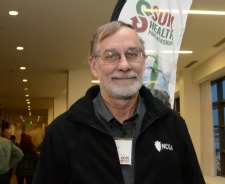
Jim Gulliford with the Soil and Water Conservation Society spoke about their involvement while at the Soil Health Summit in Indianapolis this past week.

When asked about the value in supporting the SHP, Gulliford commented on the mutual goals the two organizations share. “Farmers learn from farmers and to have farmers leading the effort, getting demonstrations out there, communicating with their neighbors, that’s a real positive way to communicate opportunity to improve soil characteristics, or soil health,” he said.

“The Society’s interests are transitioning science into practice. We’re looking for innovations in science and agriculture that we can take to organizations that take them out to the fields, to the farmers themselves.” When the farmer actually implements the practice and makes those management changes, then SWCS knows they have done their work.

The SWCS supports the Soil Health Partnership through financial means as well as outreach such as publications and the SHP website.

Listen to the rest of Jim’s interview: Interview with Jim Gulliford, Soil and Water Conservation

Karen Scanlon

Karen Scanlon

The Conservation Technology Information Center is another supporting partner of the Soil Health Partnership. “The Conservation Technology Information Center helped to identify and incorporate into the partnership two farmers from a watershed project in Illinois,” says CTIC Executive Director Karen Scanlon. “We’re looking forward to doing even more work with the partnership and spreading the information we’re learning through the farmer network and through the farmer data.”

This initiative, with the help of the demo farmers, is about collecting information and data directly from farmers who are using conservation practices; that’s exactly what CTIC does and the type of information CTIC likes to share. “We are about supporting, encouraging, and providing information that helps farmers adopt conservation systems that are productive and profitable so partnership with SHP just makes sense for us.” explained Scanlon.

Scanlon adds that CTIC would like to see more solid data about soil health benefits come out of the Soil Health project.

Listen to the rest of Karen’s interview: Interview with Karen Scanlon, CTIC

2016 Soil Health Summit Photo Album

Conservation, cover crops, CTIC, Soil, Soil Health Partnership, Sustainability

Soil Health Partnership Continues To Grow

Taylor Truckey

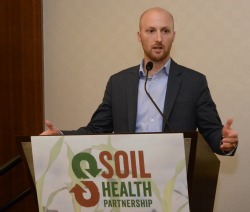
nick-goeserNick Goeser, Director of the Soil Health Partnership as well as Director of Soil Health and Sustainability for the NCGA, gives us an update on what to expect at the Soil Health Summit as well as future plans.

“The Soil Health Summit is a number of different topics combined together. First we’re focusing on innovation, innovation in agriculture production. We’re looking at conservation practices as technologies and trying to focus on those while also being educational, telling people about the different options they might use on their operations.” It’s not all fun and games, attendees are also treated to an evening reception.

As the SHP continues to grow and focus on understanding the economic benefits of soil health, in addition to the environmental, they’ve set a goal to enroll 100 farmers over the next 5 years to have an adequate representation of a variety of regions. Goeser also elaborated on the collaboration with AgSolver and what it means for growers involved in the project.

“Every farmer will be able able to use AgSolver’s precision business management software to identify and help enable them to make better decisions on their land.” Goeser explained.

After Summit, the Soil Health Partnership will be heading directly into planning for future events while getting 2016 research strip plots planned and data from 2015 aggregated. The Soil Health Partnership has an exciting couple of years ahead with the support companies and demo farmers who are supporters of their mission.

Listen to the rest of Nick’s interview: Interview with Nick Goeser, Soil Health Partnership

2016 Soil Health Summit Photo Album

Conservation, cover crops, NCGA, Soil, Soil Health Partnership

Soil Health Demo Farmers At #SHPSummit16

Taylor Truckey

Gordon Smiley

Gordon Smiley

The Soil Health Partnership (SHP) has a number of their demo farmers, the farmers who are implementing field size research trials over the next 5 years, at the Soil Health Summit this week. Hear from a few of them about their experiences so far in the program, and their hopes for what the next few years will bring.

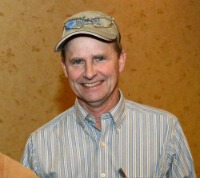
Gordon Smiley is new to the demo farmer program, but he, and his brother he farms with, aren’t new to cover crops. “We’ve actually been doing cover crops for five years so we feel like we’re going to move along; we’re going to explore single species and multiple species.” Most farmers begin with a conventional tillage vs no-till field size strip trial, but with Gordon’s experience, they are going to take the research a little further.

With the cattle that they also have on the farm, Gordon is looking forward to implementing the relationship between livestock and cover crops in a few ways. “With the livestock operation, we’re really excited about the manure application being taken up by the cover crops in the fall so we don’t have to worry about nutrient release.”

Gordon and his brother both carry spades in their pickups and have made it a running contest to see how their soil is building. Recently they dug up a couple of corn plants with root systems 26 inches and 22 inches in length. Gordon explained, “That tells us it’s coming out of an earth worm channel. That’s very exciting.”

Listen to the rest of Gordon’s interview: Interview with Gordon Smiley, Indiana Farmer

Roger Zylstra

Roger Zylstra

Roger Zylstra, who farms 50 miles east of Des Moines, enrolled in the program in 2015 as well. The driving force behind his decision to join was wanting to improve their soil. As a former grain and livestock operation, Zylstra’s crop rotation used to be include hay; since they’ve sold the cows that isn’t the case any longer.

“One thing I was noticing was that I didn’t think my soil structure was holding as good as i would have liked it to on some of our more rolling ground that we farm. I decided that this a program that could help us identify and improve our soil structure.”

A year ago Zylstra did a small cover crop field on their own, and they have a neighbor who has been implementing cover crops. Zylstra was pleased with the results and is looking forward to learning from the members Soil Health Partnership as the next few years play out.

Zylstra is also a member of the Iowa Corn Board.

Listen to the rest of Roger’s interview: Interview with Roger Zylstra, Iowa Farmer

2016 Soil Health Summit Photo Album

Conservation, Farming, Soil, Soil Health Partnership, Sustainability

A Zippy 500th ZimmCast

Cindy Zimmerman

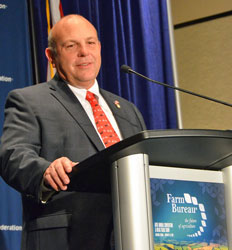
ZimmCast 499We wanted our 500th ZimmCast to be something special so we felt it appropriate to spotlight the new president of the American Farm Bureau Federation who has a name that is sure to be unforgettable – Zippy Duvall of Georgia. Yes, Zippy is a nickname, one that Duvall has had from infancy, although he is proud that he has two namesakes that share his given name Vincent, which they do use. He and his wife, Bonnie, have four children – Vince, Corrie, Zeb and Zellie. Gotta love the whole Z thing they have going there!

afbf-zippyDuvall, who served as president of Georgia Farm Bureau for nine years, was elected as AFBF’s 12th president at the organization’s 97th annual convention in Tampa. He is a poultry, cattle and hay producer and has been a Farm Bureau member since 1977. He loves farming, his family and his faith and he is very serious about the future of agriculture. I caught up with him on his first full day in the AFBF Washington DC office this week, getting right into the swing of things with ZEST!

We are pleased to welcome Zippy Duvall as the new president of AFBF and look forward to seeing him often in the years to come down the AgriBlogging highway.

Listen to this week’s Zippy ZimmCast here: ZimmCast with new AFBF president Zippy Duvall

2016 AFBF Convention photos

The ZimmCast

sponsored by
The ZimmCast podcast is sponsored by GROWMARK
Locally owned, globally strong.
AFBF, Audio, ZimmCast