
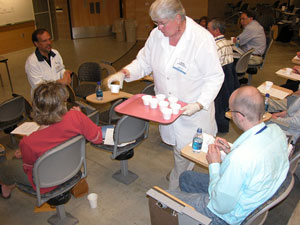
 How difficult could it be to figure out whether a piece of meat is tough or tender, dry or juicy, flavorful or not? A group of ag journalists found out this week as guests of Elanco Animal Health to a Sensory Evaluation Briefing at Iowa State University.
Basically, we all got a crash course in how to be “sensory panelists.” First, we had to learn just how our senses can fool us – like our sight filling in lines to make triangles in a picture when there are none!
Then, we had to learn how each one of our senses plays a role in how we “taste” a food. We were given a small cup covered in aluminum foil. First we shook it and gave it attributes based on the sound – like that it was small, in pieces, and dry. Then, we poked holes in the foil and gave it a sniff. It smelled salty, spicy and corny. When we looked inside, we evaluated the appearance by color and size – small, flat, kind of orange-red-yellowish. When we picked it up, it felt grainy and light. Last of all, we tasted it – and found out that most of the attributes we gave it – spicy, peppery, corny – were actually not tastes, but flavors. Big difference. By the way, it was some kind of Doritos.
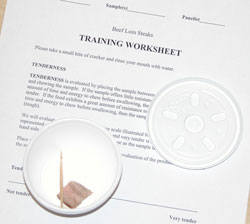 Anyway, then we moved on to learning how to evaluate little bits of meat for tenderness and juiciness. Before doing everything we had to eat a bite of non-salted cracker and swish some water around in our mouths to cleanse our palates. When we ate each bite of meat, we had to use a toothpick and place it back between our molars.
The whole process took about an hour before we were considered “trained” – but real panelists take much longer to train. The Sensory Evaluation Unit has dozens of trained panelists they use to evaluate food products for all kinds of companies, including Elanco. The panelists actually get paid for their work, but they didn’t tell us how much!
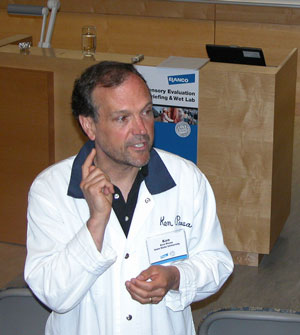 When it comes to testing food, it’s all the senses that count, not just taste.
 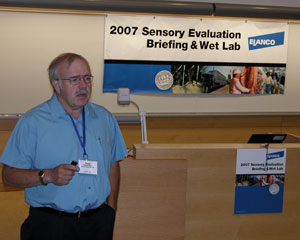 Designing trials for a new animal health product to evaluate meat quality is expensive and complicated, according to Dr. Floyd McKeith with the University of Illinois Department of Animal Sciences. He was one of the speakers at a workshop for ag editors this week in Ames, Iowa sponsored by
 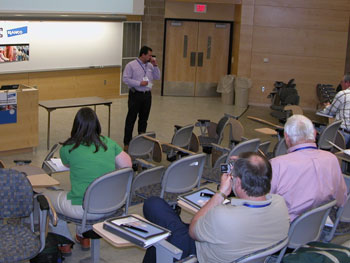 Bringing an animal health product to market requires a lot of testing – not just on how that product affects the animal, but also how it affects the meat that comes from that animal.
  By Harry Siemens – The Canadian International Grains Institute reports buyers of Canadian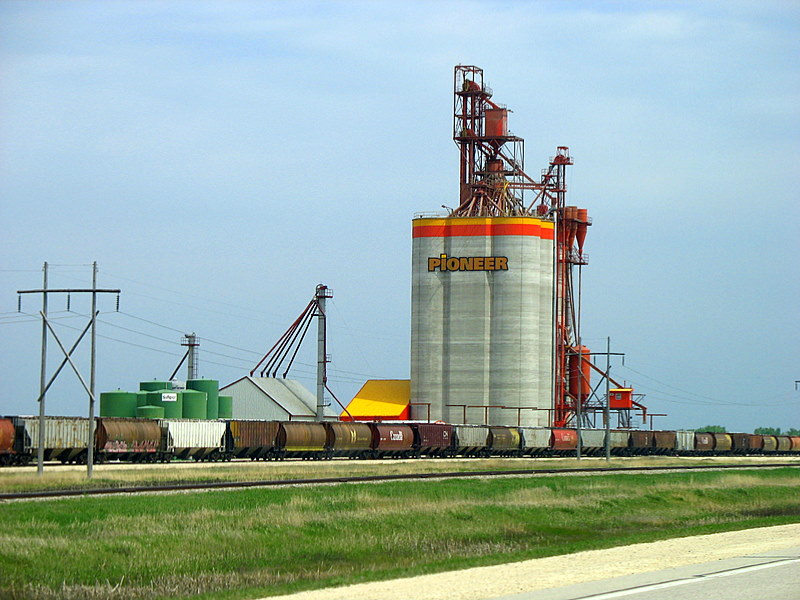
 I know I just wrote about the introduction of
  If you’re interested in reaching the rural lifestyle folks (who isn’t?) then the
  It sure takes a long time to get back from the coast, especially the west coast with the time difference. But I’m back and working on catch up.
 I think every guy in America would like to have a