BASF Seed Treatment

Cindy Zimmerman

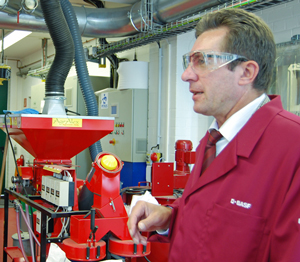
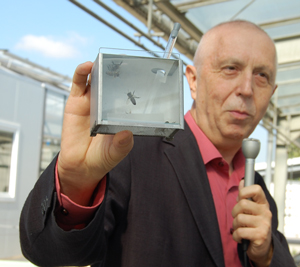
BASF Andreas LandesOur final stop at the BASF research facility last week was the seed treatment center where we heard from Dr. Andreas Landes who is in charge of the center.

“Our goals here are the development of products which are easy to use,” said Dr. Landes. “Seed treatment is one of the most target oriented crop protection measures you can imagine.”
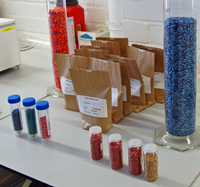
BASF SeedsLike everything else in BASF product development, quite a bit of work goes into creating treated seeds. “We are involved from the early development stage, from the research phase,” he said.

The result of their efforts is a rainbow of seeds carrying chemicals right on them to make crop protection easier, safer and more effective for farmers.

Listen to my interview with Dr. Landes here:
basf-landes.mp3

View the Flickr Photo Album from BASF in Germany and Brussels
BASF, International, Seed

BASF Ecotoxicology

Cindy Zimmerman

BASF Christoph KunastOkay, so if Dr. Speakman was excited about fungi, Dr. Christoph Kunast is simply buggy about insects.
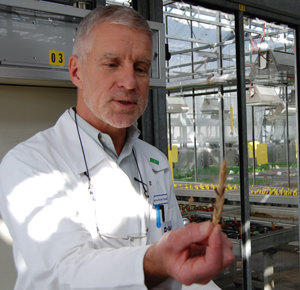
Kunast’s job with BASF is ecotoxoxicology, which he explains “is the science of side effects of chemicals against living organisms.”

“What we must ensure for registration purposes is that these side effects are acceptable,” said Kunast. What that means is politically driven to some extent, he says, and can be some what of a moving target as the criteria keeps getting more stringent.

Dr. Kunast spent some time talking about Colony Collapse Disorder and its effects on his honey bee friends and what might be causing it. He also showed us his little hissing cockroach friend – a short video we’ll post here soon.

Listen to Dr. Kunast’s opening monologue about ecotoxicology here:
basf-kunast.mp3

Post Update: Here’s that video.

View the Flickr Photo Album from BASF in Germany and Brussels

BASF, Environment, International

BASF Fungi Guy

Cindy Zimmerman

BASF John-Bryan SpeakmanThis is a guy who really loves fungi.

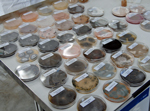
Mycologist Dr. John-Bryan Speakman is a research scientist with BASF Fungicide Research and you wouldn’t believe how excited he can get talking about fungi. But some of them are really very pretty. I never knew there were so many different types of fungi with so many colors and shapes and sizes. We thought BASF could start a new business making paperweights and jewelry out of them!

BASF Fungi“The mycologists estimate there are about 1.6 million fungal species,” says Speakman. “To date we have identified about 85,000 of these. There are about 8,000 plant pathogenic fungi in the world.” And can you guess what plant is the most impacted by fungi? It is actually grass – some 160 fungi can create problems for turfgrass and golf courses.
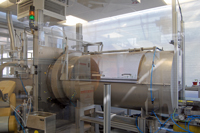
BASF StargateDr. Speakman also demonstrated BASF’s new Stargate method of applying test compounds to plants. “It enables us to reduce the amount of compound being sprayed,” Speakman said. It also runs by computer to reduce human exposure to unknown compounds. I shot a little video of that which is being edited and we should be able to post here before too long.
Listen my interview with Dr. Speakman here:
basf-speakman.mp3

Post Update: Here’s that video.

View the Flickr Photo Album from BASF in Germany and Brussels

BASF, International, Research

Pioneer Known in Ukraine

Chuck Zimmerman

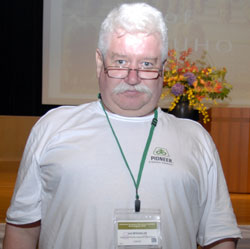
Jurii MikhailovSince our sponsor for coverage of this year’s IFAJ Congress is Pioneer I couldn’t help but post a picture of Jurii Mikhailov, Univest Media, Ukraine. Jurii was sporting his Pioneer t-shirt during our first full day of activities.
We’ve had a chance to spend some time talking with Jurii and like with all the participants there’s lots we can learn from our counterparts in other countries around the world. This is one of the great benefits of being active with IFAJ. I wish more U. S. ag journalists would take advantage of this great resource.


IFAJ Congress 2007 Photo Album

AgWired coverage of IFAJ 2007 is sponsored by: Pioneer-HiBred

IFAJ, Pioneer

IFAJ-Alltech Young Leaders in Agricultural Journalism

Chuck Zimmerman

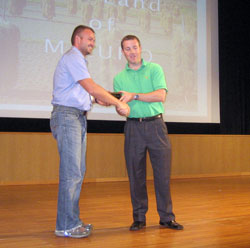
Alltech AwardsA main sponsor for the IFAJ Congress here in Japan is Alltech. One of their representatives traveling with us is Billy Frey. He was onstage presenting the IFAJ-Alltech Young Leaders in Agricultural Journalism Awards. Cindy was there while I was working in another location at the time so I’m not sure who is on stage with Billy here. Maybe somebody can leave a comment and identify him.
The recipients are Goran Djakovic of Serbia, Clemmie Gleeson of Great Britain, Jiri Masek of the Czech Republic and Karli Flinta-Murphy of Canada. The Award supports their participation here at the Congress.

“We are fortunate to have such talented young journalists in our member countries,” says IFAJ President David Markey of Ireland . “All the recipients are poised to become leaders in their guilds and in the federation.” The travel scholarship recognizes the leadership potential of young members from countries belonging to the federation. It encourages their involvement in the international organization by sponsoring them to attend the federation’s annual congress, where they will meet the world’s top agricultural journalists.

The winners were nominated by their respective guilds and chosen by an international selection committee comprising Owen Roberts of Canada (chair), Hans Siemes of The Netherlands and Dana Vecerova of the Czech Republic .


IFAJ Congress 2007 Photo Album

AgWired coverage of IFAJ 2007 is sponsored by: Pioneer-HiBred

IFAJ, Pioneer

Back Online in Sendai

Chuck Zimmerman

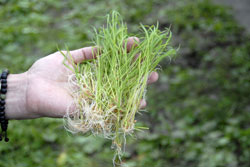
Rice SeedlingI’m back online here in Sendai, Japan on Thursday morning. It’s a beautiful day here. Cindy and I elected not to tour today. We were so exhausted by the time we got in last night that we needed some time to relax. Most of our IFAJ group is out on one of 4 different tours. They’re going overnight and won’t be back until late tomorrow night. We just couldn’t do it since we need internet access and time to work and none of that is taken into consideration in the schedule.
Besides posting here on AgWired we’re working on posts for about 4 other websites like Domestic Fuel, World Dairy Diary, Corn Commentary and Precision Pays.

The rice plants you see pictured are from our last stop yesterday at a research facility. I’ll have more on that in a later post. Thanks to Kurt Lawton for the hand. The photo album is up to date now so feel free to browse.


IFAJ Congress 2007 Photo Album

AgWired coverage of IFAJ 2007 is sponsored by: Pioneer-HiBred

IFAJ, Pioneer

Prescreening Process for BASF

Cindy Zimmerman

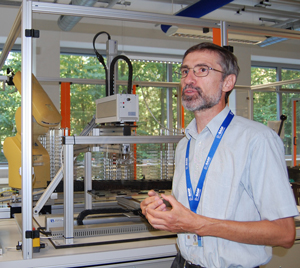
BASF Franz RohlMaking new compounds for crop protection is no overnight process and we got to learn a little bit about how it is done during our visit to the BASF research facility in Limburgerhof, Germany last week.
Our first stop at the research facility was prescreening, where Dr. Franz Rohl explained some of the steps they take in looking at the potential for various compounds.

“The laboratory is the first place to test unknown chemicals for biological activity to find out if they have herbicide, fungicide or insecticidal activity that is of interest for our chemists,” said Rohl.

But Rohl says only one out of 140,000 of the compounds they test end up going on to the farm fields.

Listen my interview with Dr. Rohl here:
basf-rohl.mp3

View the Flickr Photo Album from BASF in Germany and Brussels

Audio, BASF, International, Research

Future is in the Genes

Cindy Zimmerman

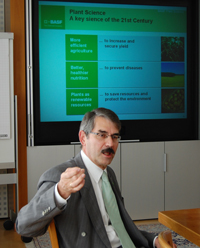
BASF Hans KastAccording to the President and CEO of BASF Plant Science Dr. Hans Kast, the future is in the genes for agriculture. Kast gave ag journalists an overview of that future in Germany last week.

“Plant biotechnology will play a crucial role in ensuring that the rapidly growing population continues to have a sufficient supply of high quality food,” said Kast.

BASF Plant Science’s research activities focus on solutions for effective agriculture, healthier nutrition and plants for use as renewable resources. BASF Plant Science is an international Research and Technology “Verbund” with eight sites in Europe and North America.

BASF, Biotech, International

Last BASF Execs Interview

Cindy Zimmerman

Finally we have “escaped” from our non-stop tour activities here in Japan so maybe I can clear out all my interviews from Germany and Brussels, which seems like it was a month ago.

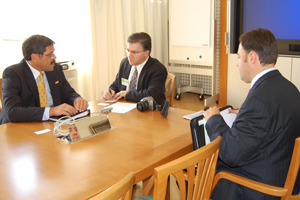
BASF Markus HeldtThe last of our interviews with BASF executives was Markus Heldt, who is group vice president for BASF North American Ag Chem. In this photo, he is being interviewed by Wayne Wenzel with Farm Journal/Top Producer as Dan Muys with Quarry Communications looks on.

Heldt tells us a little bit more about Headline and its use against soybean rust, especially with increased acreage of soybeans in the southeast now for biofuels production.

“I think the overall hike in the commodity prices – corn, soybeans, wheat – has helped farmers to focus on yield and the willingness to invest in fungicides,” says Heldt. “So that environment is clearly favorable for our business for the foreseeable short term future for the agriculture in North America.”

As for the future of Headline, Heldt sees significant growth potential. “In what we call the traditional crops, especially wheat with higher price, still significant growth potential. And if you look at corn, we have less than 10 percent of the available acreage treated, so there’s about 90 percent growth potential.”

Heldt also talks about Pristine fungicide and ramped up efforts to market products for specialty crop producers.

Listen my interview with Markus here:
basf-markus.mp3

View the Flickr Photo Album from BASF in Germany and Brussels

BASF, Corn, International, Soybean

Consumers Tempted by Tender Beef

Laura McNamara

ElancoThe beef industry isn’t just asking “Where’s the beef?” anymore, but “How’s your beef?” Elanco Animal Health says research shows consumers spend more for tender and tasty beef.

Consumers tell us that tenderness and taste are two of the most important attributes when they are evaluating their beef eating experience. They want tender beef and are willing to pay for it.

That was the message Dr. Keith Belk, professor at Colorado State University’s Center for Red Meat Quality and Safety, delivered to agricultural editors and other participants at a Sensory Evaluation Briefing and Wet Lab held at Iowa State University. The training session was hosted by Elanco Animal Health as part of its continuing effort to educate beef producers on the importance of tenderness of the beef they produce.

Tenderness is an important aspect of beef palatability that ultimately drives consumer satisfaction. The Beef Checkoff’s 2005 National Beef Tenderness Survey shows the industry has made improvements since the 1999 study, but there still are inconsistencies and a need for improvement.

A key factor in beef tenderness is the aging process. Most experts agree beef becomes more tender when it is aged about 21 days. However, according to a number of meat industry experts – including the University of Minnesota Extension department – most of the beef offered for sale as retail cuts in the supermarket is aged five to seven days. Rarely is beef in the retail case aged more than 10 to 14 days.

Aging isn’t the only factor driving beef tenderness. “Quality grades and marbling itself have become extremely important,” says Belk. “Prime and upper two-thirds of Choice-branded beef are in high demand and are returning larger profits back through the production chain. That’s the signal consumers
are sending to us. An excellent example of that is the success that Certified Angus Beef LLC® (CAB®) is experiencing.”
Read More

Ag Groups, Beef, Elanco, Food