
A panel of six representatives from major farm equipment manufacturers took seats on a panel at the Association of Equipment Manufacturers AgExecutive Forum in St. Louis Thursday to discuss “The Next Generation of Ag Show” – AG CONNECT expo, scheduled for January 12-15, 2010 in Orlando.
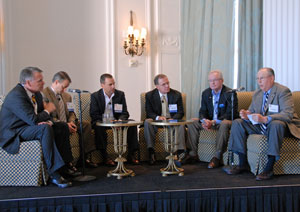 The executives, from left to right, were Doug DeVries, Deere and Company; Doug Griffin, AGCO; John Koetz, Case IH; Rusty Fowler, Krone NA; Gary MacDonald, MacDon Industries; and Dick Brown, Krause Corp. They are all very excited and supportive of the new show which promises to be a “worldwide and world-class experience; bringing the world of agriculture together in one gathering place for the benefit of exhibitors, producers, government, media, and all key industry leaders.”
We heard some of Doug DeVries comments about AG CONNECT in an earlier post, but I also had the opportunity to visit one on one with three of the other execs on the panel who have all been involved in developing the event as part of the show committee.
John Koetz of Case IH says, “What’s different here is that it’s designed around what the producers have been asking for. They are looking for more than just seeing the machines, they are looking for what are going to be the solutions, they want to interact with each other and industry experts, both here in the United States and internationally.”
Listen to John’s interview here:
aem-forum-08-koetz.MP3
Gary MacDonald of MacDon, which is a family-owned manufacturer of harvest machinery based in Winnipeg, thinks AG CONNECT will be the biggest thing to hit the industry in many years because of its global nature. “Going back 20-25 years, our market was 80 percent Canadian and 20 percent US, today the breakdown is 35 percent Canada, 35 percent US and heading toward 30 percent outside North America. So the export market has grown tremendously.”
Listen to Gary’s interview here:
aem-forum-08-macdon.MP3
Dick Brown of Krause says the show is a vision that started about 15 years ago. “We realized that equipment is just one part of a farming system and we needed to bring all of the elements of the farming system together to have a world class event.” He says the show is patterned to some extent on Germany’s AgriTechnica, but even more diverse in terms of what it offers for producers.
Listen to Dick’s interview here:
aem-forum-08-brown.MP3
You can also download the interviews for broadcast use with these links:
John Koetz
Gary MacDonald
Dick Brown
View and download photos from the AEM AgExecutive Forum here.
 Republican presidential candidate Senator John McCain is causing quite a bit of concern among members of the agriculture and ethanol industries with his comments about farm programs and ethanol incentives. Last week in Missouri, McCain said, “My administration will reduce the price of food by eliminating the subsidies for ethanol and agricultural goods. These subsidies inflate the price of food, not only for Americans but for people in poverty across the world, and I propose to abolish them.”
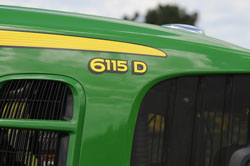 The other major line of utility tractor just launched by John Deere is the
 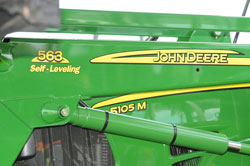 One of the new utility tractors that John Deere has just launched is the
 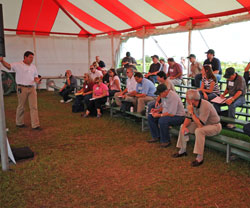 The first stop on our John Deere, Drive Green, media event was an introduction to the new utility tractors. Dan Pashke (in video, not this picture) gave us the rundown with the who/what/where/when and why. In this video clip you’ll also see some demonstrations of the machines. All the new utility tractors use the
 Sara Wyant and Stewart Doan at
 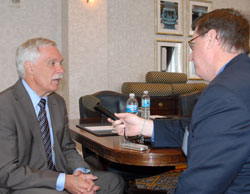 Cindy here with an addition to this post. Here is a photo of Stewart interviewing Secretary of Agriculture Ed Schafer yesterday in St. Louis for this new program. Unfortunately, they do not have a photo of him interviewing Sen. Obama, as the interview was done by phone – not a real exciting photo op, I guess.
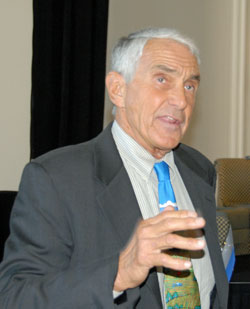 Dr. Jay Lehr has the title of Science Director for an organization called The
 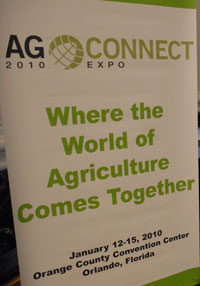 A preview of the new generation of ag show – AG CONNECT 2010 – was offered to ag executives meeting Thursday in St. Louis.
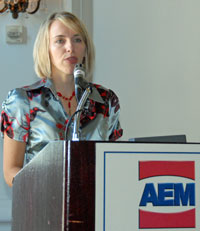 “We conducted a lot of research with producers,” Sara told me. “And from that research we developed a number of event features that would be unique to AG CONNECT.”
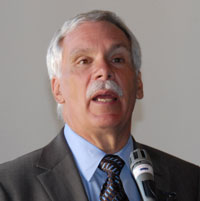
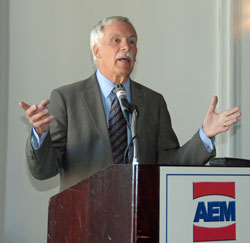 U.S. Agriculture Secretary Ed Schafer discussed some of the big issues facing agriculture today and in the future during an address to agribusiness company executives meeting in St. Louis Thursday for the