It may sound disrespectful, but our good friend Derry Brownfield always referred to the day of his funeral as “Bury Derry Day” – so that’s what we’re calling it!
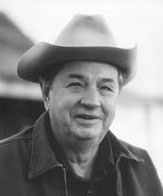 The official obituary has been published now in the Jefferson City News Tribune with the important facts of his life distilled into a few short paragraphs. Those who knew him could write a book about him!
But here are the details for visitation and funeral and such:
Funeral services will be held on Wednesday, March 16, 2011, at 11:00 a.m. at California United Church of Christ, California, Mo. Burial will be in California Masonic Cemetery. Visitation will be held on Tuesday, March 15, 2011, from 4:00 p.m. – 8:00 p.m. at Bowlin-Cantriel Funeral Services, California, Mo. Memorials are suggested to the Gideon’s International, c/o Derry Brownfield, P.O. Box 79, Centertown, MO 65023. Arrangements are under the direction of Bowlin-Cantriel Funeral Services, California, Mo.
I will be there tonight for the visitation. Chuck is hoping to get back from DC early enough tomorrow morning to get to the funeral. We know that many of Derry’s friends and fans will be there – along with his wonderful family. It is sad to know that his voice will no longer be coming out live from a microphone here on Earth, but we will be celebrating the time we had with him and his new life in Heaven this week!


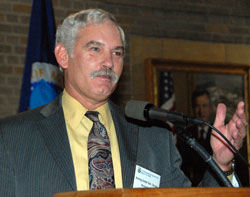 At the National Ag Day dinner in Washington, DC our keynote speaker was USDA Under Secretary Michael Scuse. He welcomed us to this day of celebration.


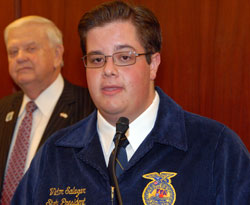 We’ve got youth in agriculture here at National Ag Day from just about every organization you can think of including the FFA. Introducing our lunch speaker today was Victor Salazar, Connecticut FFA state president. He was introduced by Orion Samuelson and I’m thinking that alone made an impression on him. But then it was his turn to do the introduction and he did an awesome job. I’ve got his intro on the audio file you can listen to below.
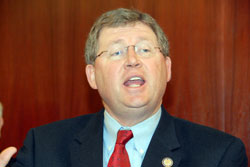 U.S. Representative Frank Lucas (R-OK), Chairman of the
 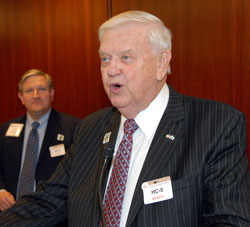 The man with the voice no one will forget, Orion Samuelson, WGN, emceed the National Ag Day Mix & Mingle Luncheon today. I spoke with Orion before the program got started to get his thoughts on Ag Day and learn what we’ll be doing this celebrate American agriculture day.
 Now in its sixth season, the PBS show shares the stories of America’s farmers and ranchers with a sophisticated public television viewing audience and is seeking production funding for its seventh season. To that end, the grassroots
 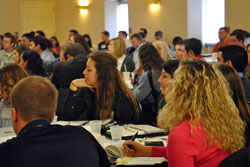 Students are getting a little training today for tomorrow’s National Ag Day activities. I am not there yet. In fact, the snow in Missouri caused my flight to be canceled. However, I’m now scheduled for a late flight out tonight. So I’m going to miss the reception this evening with Michael Peterson.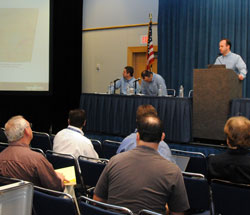

 “The introduction of dicamba tolerant crops combined with improved dicamba formulations will provide farmers the tools they need to combat the yield-robbing weed resistance some are facing in their fields today,” said Markus Heldt, President of BASF’s Crop Protection division. “Since the introduction of Clarity® in 1992, BASF has continually improved its dicamba offerings. Our next generation products will offer yet another step change in volatility reduction while maintaining the highest level of weed control. The system, along with proper stewardship measures, will ultimately deliver peace of mind for growers.”