College students pursuing degrees in science had the opportunity to find out about all kinds of career options during the recent “Science in Action: A Foundation for Dynamic Careers” sponsored by Novus International and the Missouri Colleges Fund.
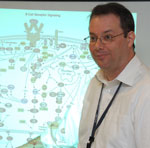 Novus’ Senior Manager of Biology Research Jim Richards gave the students a glimpse into how Novus is using science to develop nutrition solutions to help feed a growing world population. “The thing that’s been been really interesting about being here is learning how I can apply my skills in cellular and molecular biology to very important problems in agriculture,” he said.
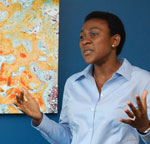 Research engineer Oriana Obiri-Ampomah told the students about growing up in Ghana and deciding to become a chemical engineer. “My vision has been to make a lasting impact on people’s lives and growing up in Africa, I know what it means for people to not necessarily have three square meals a day,” Oriana said. “So, to know that everyday the little work I do here will help change someone’s life is so important.”
 The students learned about a non-traditional veterinarian job from Dr. Miguel Escobar, Global Director of Animal Utilization with the US Soybean Export Council, who appreciated the effort by Novus to expose science-minded college students to a variety of potential career paths. “I talked about what a veterinarian can do in his or her life,” he said. “It was a learning experience for me because it was the first time I thought about how I can help young people to go to the sciences in the future.”
You can listen to Jim, Orianna and Miquel’s comments here: Jim, Orianna and Miguel
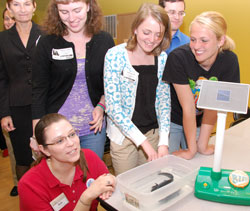 The Novus “Science in Action” day also included a trip to the St. Louis Science Center, where the students heard from five staff members with a variety of different backgrounds in science and responsibilities at the center.
Life Sciences Gallery Lead Beth Prakash (pictured) showed off one of the center’s axolotl, a Mexican salamander. “We’ve got a project called ‘Axolotls in the Classroom’ where we loan these axolotls out to teachers and we provide them with care instructions and lessons plans on a variety of subjects,” she said.
Sarah Schoenlaub, Gallery Leader Physical Science, was a science education major with an emphasis on biology and now has a really fun job. “This has probably been the most fun job I’ve ever had,” she said. “I usually have to stop in the middle of meetings and say ‘Sorry guys, I have to go blow something up on a stage in front of a bunch of kids.”
The students also heard from Ecology and Environment Gallery Leader Kat Golden, who majored in environmental studies at Truman State; David Ritchey, associate director of the planetarium, who always had a love for astronomy even though his first career was in communications; and Jarel Loveless, manager of Annual Giving, who started as a journalist and now is a grant writer for the center.
You can listen to comments from Sarah, Kat, David, Jarel and Beth here: St. Louis Science Center
Next we’ll here from the participants of the 3rd annual “Science in Action” day.
See more photos from the event here: Novus Science in Action Day 2011 Photos

 ZimmPoll is sponsored by Rhea+Kaiser, a full-service advertising/public relations agency.
 Mobile apps are where it’s at. That’s kind of the theme of this week’s program. I’ve been asked many times who developed the