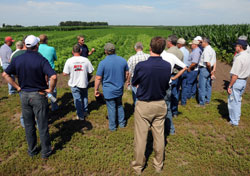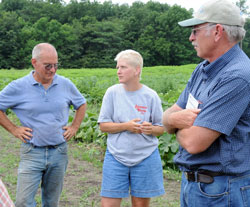
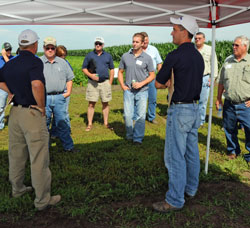
 Sam Lockhart, FMC Technical Sales Manager (pictured on right), is one of the teachers on the company’s Summer Plot Tour taking place this week. I visited with Sam after the activities in York, NE. He works a northern territory that has had a lot of moisture, in fact too much. That presents some challenges. Farmers have struggled to get weed control products out. Some have had to do aerial application. But those who were able to get early applications of the FMC Authority line of products have seen much cleaner fields.
Some of the questions Sam has received from retailer participants deal with weed resistance and how to control these weeds early on. He say they want to know how to “switch out the modes of action they’re using from doing the same old thing they’ve been doing for years which has worked until the last couple years here – Roundup, Roundup, Roundup. How do I break that up?” The answer he says is the FMC Authority line and their new product that will be out soon, Anthem.
You can listen to my interview with Sam here: Sam Lockhart Interview
Sam was also out in the test plot and one of our presenters showing us how well a combination program of Authority and Anthem has performed as you can see in this video:
 What’s new in the world wide web? Lots of things. In this week’s program I’m sharing a conversation with Quentin Rund,


 The stage is set for the
 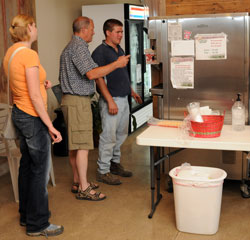 The CTIC Indian Creek Watershed Project field tour included a stop at Kilgus Dairy. The family dairy farm is the only one in the state bottling their own milk. They also grow corn and soybeans and have land for the cows to graze on. They move those cows periodically, allowing the paddocks to grow back. In the picture you can see Matt Kilgus showing our group how to pour our own ice cream in the on-farm dairy products store,
 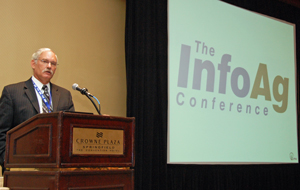 I have now moved from Nebraska to Illinois for the 2011 InfoAg Conference. This is all about precision agriculture so most of our coverage will be found on