 When is the last time you ever heard someone say, “Can you grab me a soda from the icebox?”? I bet it’s been a while. Let me translate: icebox or ice chest = freezer/refrigerator. And when I came across this large tong-shaped item my curiosity kicked in.
It’s an ice hook. In the early 1900s, folks would use this tool to “harvest” blocks of ice from ponds, wrap them in straw or sawdust to keep the ice as long as possible, and store them in an insulated building. They’d later pop one of those blocks in the icebox to keep food from spoiling … this was done long before refrigerators/freezers came about.
Back home there used to be an ice plant and after church on Sunday my grandpa would swing by the mill and grab some ice blocks for making homemade ice cream.
My flimsy ice tongs seem cheap and lightweight after lifting this monster! Thank you, Carl von Linden, for creating the refrigerator/freezer. I love that ice comes out of the door and not out of a pond.
Until we walk again …

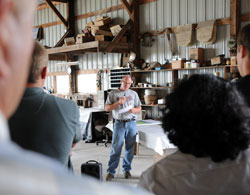 One of the stops on the CTIC Indian Creek Watershed Project field tour was Traub Farm. Our presenter was John Traub. The family farm grows corn, soybeans, specialty hybrid seed corn and hybrid sunflowers. The farm was named the Livingston County SWCD Conservation Farm Family in 2010. So they take conservation seriously.
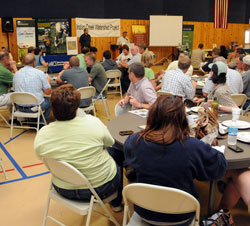 The Conservation Technology Information Center’s Indian Creek Watershed Project is funded in part by the
 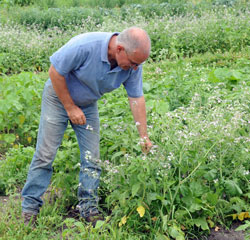 The oldest family farm in Livingston County, IL is
 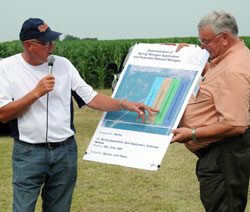 My first stop on the CTIC Indian Creek Watershed Project field tour was Harms Farm. Our host was Kevin Harms (left) pictured pointing to a chart being held by Harold Reetz. Kevin’s farm is in southern Livingston County, Illinois. He’s one of the farmers that has volunteered to participate in this project.
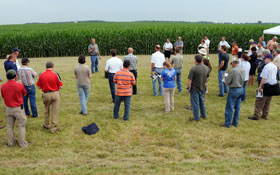
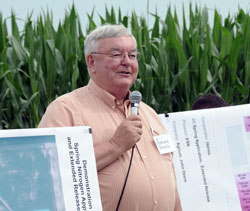
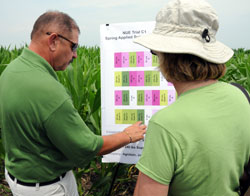 Field days and tours are heating up this summer along with the weather. During the CTIC Indian Creek Watershed Project field tour one of our stops put us right out in the corn, looking at the impact of various levels of nitrogen application. Martin Case,