Corn Farmers Coalition Ads Target Lawmakers

Cindy Zimmerman

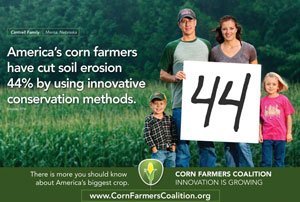
cornFor the third year in a row, the Corn Farmers Coalition (CFC) is targeting policy makers with information about the nation’s corn crop and the people who produce it.

The new ads highlighting corn farming families showed up this week all over Union Station, an important venue for reaching policymakers inside “The Beltway,” as well as in Capital Hill publications, radio, frequently used web sites, the Metro and Reagan National Airport.

“Even in the 21st Century, corn farming remains a family operation,” said Kansas Corn Commission Chairman Mike Brzon, a farmer from Courtland, Kan. “The family farmer growing corn for a hungry world isn’t a myth, but a critical economic engine for our country and it’s important that policy makers and influencers realize this.”

“Last year, we saw a good response to our positive and proactive efforts, and this year we have many new people inside the Beltway to educate,” said NCGA President Bart Schott of North Dakota. “As urban and suburban America gets further removed from the agricultural roots that made our nation strong, we’re saying it’s time again for everyone to come home to the farm.”

The coalition will also be meeting with media, members of Congress, environmental groups and others to talk about how U.S. farmers, using the latest technologies, will continue to expand yields and how this productivity can be a bright spot in an otherwise struggling economy. The combined effort will continue until Congress recesses in August.
Corn, NCGA

USDA Replaces Pyramid with Plate

Cindy Zimmerman

Nutrition has a newer, rounder shape.

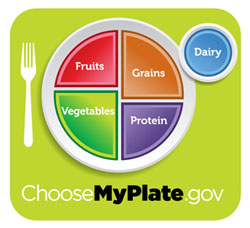
Fruits and vegetables should make up half of our plates under the more user-friendly nutrition image released today by First Lady Michelle Obama and Agriculture Secretary Tom Vilsack. USDA is ditching the long-used food pyramid for a plate. “I can already tell you how much this is going to help parents across the country,” said the First Lady. “We do have time to look at our kids’ plates … as long as they’re eating proper portions. As long as half of their meal is fruits and vegetables, alongside lean proteins, whole grains and low fat dairy, then we’re good. It’s as simple as that.”

“My plate is a tool that’s simple enough for children to understand even at the elementary school level,” she continued. “So the My Plate icon is a wonderful, kid-friendly tool.”

Details of the new My Plate nutrition symbol can be found on choosemyplate.gov.

Listen to or download Mrs. Obama’s comments here: Michelle Obama on MyPlate

USDA

AgChat Foundation Agvocacy 2.0 Conference Planned

Cindy Zimmerman

The dates and place for the second AgChat Foundation Agvocacy 2.0 Conference are set.

AgChatThis year’s conference will be held August 22 and 23 in Nashville, Tennessee. We are excited to expand the conference by opening it up to 75 people who are passionate about agriculture and interested in learning how social media can be used to tell their stories. Whether you’re involved in production ag, hobby farming, agribusiness, Extension, commodity organizations, academia or another sector of the industry, we would love to have you join us for the Agvocacy 2.0 Conference!

Similar to last year, conference sessions will include both large and small group formats and cover social media platforms like Facebook, Twitter, LinkedIn, blogs and YouTube. This year, the planning committee is also planning more one-on-one chat sessions and networking in order to help you personalize your learning in a way that is most effective for your agvocacy strategy and situation. By building on the feedback and suggestions from the initial conference last August in Chicago, the AgChat Foundation is working hard to make this event even better than the last in order to keep empowering America’s farmers and ranchers to utilize social media as a way to share their agriculture stories.

Registration is $365 and includes a free t-shirt. You can apply to attend the conference between June 1 to June 24 and those selected will be notified in mid-July. Those chosen to attend are encouraged to seek sponsorships from local businesses and organizations to help cover conference and travel costs.

Find out more here.

Uncategorized

Lettuce Harvest

Melissa Sandfort

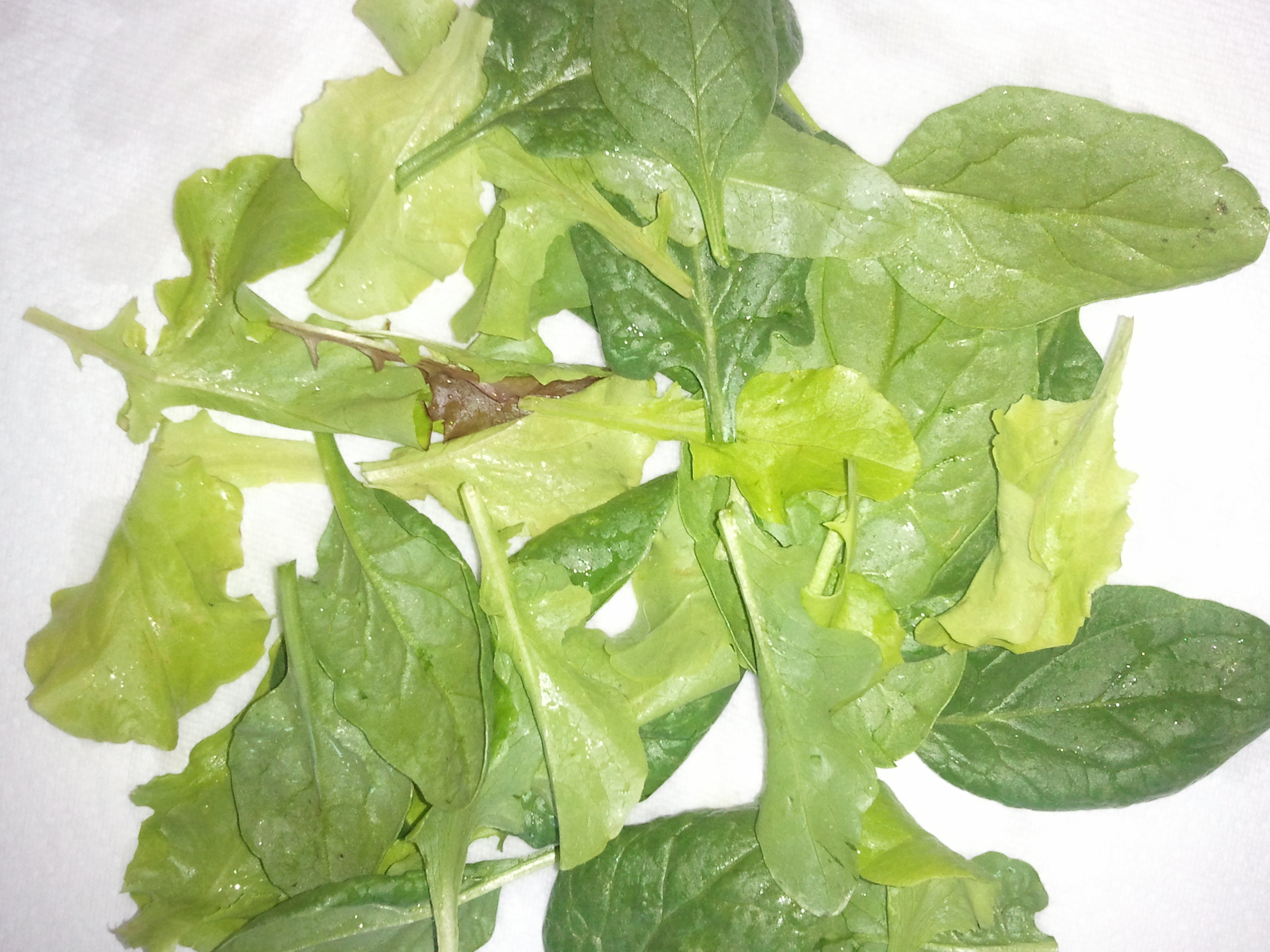
What a great feeling – reaping the first harvest from your home garden. This is my mixed lettuce and spinach, and if it would ever stop raining, I’d pick some iceburg lettuce. Now I’m kicking myself for not planting carrots; and my cucumbers seem to be late bloomers (pun intended).

Seems like these days, I’m growing a variety of things: veggies in the garden, flowers, my business, and a little boy. And I think they all need about the same ingredients – – hard work, lots of love, at least an hour of sunshine every day, patience and hope. And a lot of faith.

My husband wonders why I’m so excited about my garden. If you take a closer look, there really are so many similarities between the garden and my son. My garden flourishes with sunshine and a good attitude; my son excels when praised and encouraged. My garden has weeds that are an annoyance, and require a lot of attention and work; my son has 2-year-old “habits” that touch my last nerve, and require persistence and love to steer him in the right direction. And they both have taught me an insurmountable amount of patience!

Maybe when he’s older, I’ll have him work in the garden with me to see if he sees the same reflection in life that the garden has already, in such a short time, shown me.

But I’ve found that with all the right ingredients, for both life and salad, you can make the perfect mix.

Until we walk again …

Uncategorized

Angus Cattle History

Cindy Zimmerman

From the basement archives of the American Angus Association, comes this great historical video that cattle producers are sure to enjoy.

Originally shot and edited in 1941, this historical film tells the story of Loyal Alumnus IV, the grand champion steer at the International Livestock Exposition in Chicago. The Angus steer was produced by Purdue University.

Uncategorized

Monsanto Names 2011 Farmers Mom of the Year

Cindy Zimmerman

A Wyoming cattlewoman has been named Monsanto’s America’s Farmers Mom of the Year for 2011.

Bette Lu Lerwick of Albin was nominated by her daughter, Kosha Olsen, who visited AmericasFarmers.com earlier this spring and submitted a 300-word nomination describing a few of the contributions her mother makes to her family, farm, community and the agricultural industry. She was selected as the Northwest Region’s Farm Mom of the Year by a panel of judges from American Agri-Women and Monsanto. Online voting determined Lerwick the national winner.
“This is a wonderful privilege and I feel honored to be the 2011 Farm Mom of the Year when there are so many deserving farm moms out there,” said Lerwick. “I am proud to be from Wyoming and I’m excited to bring recognition to this wonderful state.”

Ron and Bette Lu Lerwick, in partnership with son, Monte, and his wife, Megan, raise wheat, corn, dryland beans, hay, sunflowers and beef cattle on the high plains of their centennial ranch in southeastern Wyoming.

“What does it take to plant a garden the size of a townhouse, or a square mile of sunflowers?” asked Kosha Olsen in her nomination. “How do you raise teenagers 60 miles from the nearest fast food?” Kosha outlined a few of the ways her mother supports others – from serving as “event planner, caterer, custodian, hired hand and manager” at home to driving the tractors, baking bread and delivering calves on the farm to having served as EMT for the rural volunteer fire department and attending many memorial services in the community. In addition, Bette Lu and Ron Lerwick have welcomed exchange students and at-risk youths to their farm for months at a time.

Beef, Farming

Illinois Farm Families Open Gates to City Moms

Cindy Zimmerman

Illinois Farm Families are offering mothers from the Chicago area a chance to see first-hand what farmers do, ask questions and connect with the people who produce food for their families and then share what they learn with others as Field Mom reporters.

Illinois Farm Families (IFF) will equip the “Field Moms” with video cameras so they can record and share what they see and learn. Their videos, stories, and photos will be available to everyone on the IFF website WatchUsGrow.org. The Field Moms will also be participating in media interviews and offering insights about their experiences on Twitter and Facebook.
Chicago-area Moms can apply for the opportunity to become a Field Mom at Watch Us Grow. To be eligible, a Mom must be an Illinois resident at least 18 years old, with at least one child under the age of 13 living at home. Applications will be accepted until August 21, 2011.

Field Mom applicants should have a strong interest in learning more about their food and where it comes from. They are expected to be honest, willing to ask questions among peers and farmers, and able to attend up to five day-long farm tours over the next year. Most tours will leave the greater Chicago area at 8 a.m. and return about 6 p.m. More information about Field Mom expectations is available on our website.

Even if you can’t commit to being a Field Mom, you can subscribe to follow the Field Moms on their farm tours, and communicate with them online. Illinois Farm Families will send you email alerts when the Field Moms are on the move, posting thoughts, pictures or videos, or when there’s other news to share.

Sounds like a great way to address that disconnect that non-farmers have with the people who feed them.

Farming, Social Networking

FFA Names 50 New Century Farmers for 2011

Cindy Zimmerman

The National FFA is preparing 50 young people from 23 states this year to take on the challenge of new century farming.

The FFA’s 2011 New Century Farmer program is designed to help young men and women who are pursuing a career in production agriculture.

The participants will take part in an intensive seminar July 24-30 in Johnston, Iowa where they will learn from each other and industry experts during a series of workshops and sessions. Topics will include the global marketplace, farm financing, demographic trends and risk management. New Century Farmers will hear from motivating and informative keynote speakers who will educate them on the risks and rewards involved with agriculture production. In addition to classroom learning, students will experience the latest developments in agricultural technology.

The New Century Farmer program is sponsored by Pioneer Hi-Bred, a DuPont business; Rabo AgriFinance; Case IH; and CSX Corporation; with media partner Successful Farming as a special project of the National FFA Foundation.

Education, Farming, FFA

Budget Cuts for Agriculture

Cindy Zimmerman

The budget deficit is taking its toll on agriculture programs.

The House Appropriations Committee approved a spending bill last night that includes major cuts to food safety and nutrition programs, as well as an amendment that would end direct farm payments for those with adjusted gross income over $250,000 per year.
The appropriations bill also includes cuts in research, food aid, conservation and renewable energy programs. While the Rural Energy for America Program (REAP) received $1.3 million, the Biomass Crop Assistance Program (BCAP) was eliminated from the fiscal year 2012 appropriations bill, despite pleas from a variety of agriculture, biofuels and even environmental organizations.

Other funding cuts in the bill made some agricultural producers happy. Several livestock organizations, including the National Cattlemen’s Beef Association (NCBA), the National Pork Producers Council (NPPC) and the National Turkey Federation (NTF), are pleased with the appropriations bill because it prevents USDA from implementing its controversial Grain Inspection, Packers and Stockyards Administration (GIPSA) proposal to regulate livestock and poultry marketing.

“This is the first step in preventing an unprecedented government invasion into the private marketplace. Big government has invaded banking, healthcare and more. The last thing we need is the federal government setting up shop on cattle ranches throughout the country,” said NCBA President Bill Donald of Montana.

The bill now goes to the full House for a vote but is likely to change substantially in the Senate.

Uncategorized

AgChat Discusses EPA Over Regulation of Farming

Chuck Zimmerman

Over regulation by the EPA was the topic of last night’s AgChat which I had the pleasure to moderate once again. It was an interesting conversation as always and we had some very different points of view expressed. And that’s what it’s all about. How often do you participate in a conversation where everyone agrees? Nothing wrong with that.

Here’s the list of questions that were posed. You can see the list of responses to each on the AgChat Archives page already.

Q1: What’s the single most disruptive regulation the EPA has imposed on U.S. Farmers and why? via @derekbalsley
Q2: What are the most helpful EPA regs to your operations? via @TruffleMedia
Q3: How can farmers communicate the real-life struggles w/EPA regulations to politicians & consumers? via @amyserves
Q4: How can any farmer make sure they are in full compliance with EPA regs? via @AgriBlogger
Q5: Does there need to be a better system of checks & balances for EPA & their regulations? via multiple sources
Q6: Is this really a problem with EPA or the administration? via @BeltwayBeef
Q7: How could the EPA expect to harness dust the way they’re talking in the Clean Air Act? via @DarrenOlafson
Q8: What are resources available to farmers who are having trouble with EPA regs?
Q9: What if there were no EPA and damage caused to environment was settled in court as property damage? via @derekbalsley
Q10: What will you do after participating in tonight’s convo as it relates to EPA regulations and farming?
Q11: What’s your executable idea?

There were a lot of interesting ideas and answers that came out during the course of our conversation. Some things that stood out for me include:

1. An idea that the topic was not “objective.” Really? Of course that was posed by someone who does not farm and works for an environmental extremist organization. I have never met a farmer of any size or kind who believes EPA regulations are not burdensome and often incomprehensible.

2. There was a suggestion that if you farm “organic” you will somehow not have to deal with EPA (just USDA). However, if you look at the EPA website you’ll find a whole page of information and links dealing with organic. Doesn’t look like being organic exempts you from this problem.

3. Q2 got the most responses of all. The whole idea of finding anything helpful regarding EPA regulations seemed like a foreign concept to most of our active participants. I don’t know about all you lurkers out there.

4. Someone made a point that seemed to get good agreement that it’s not just EPA that’s a problem, but Congress which created the agency and gives it the powers that it has. Of course there is also the issue of how EPA administrators interpret their role and rules as well as judges who make decisions in their courts that impact how regulations are enforced.

There’s a lot more but I won’t take time to point them all out here. Check out the archives and see for yourself and join in next time! Thanks to all who participated.

Environment, Farming