Bringing Young People Back to the Ranch

Joanna Schroeder

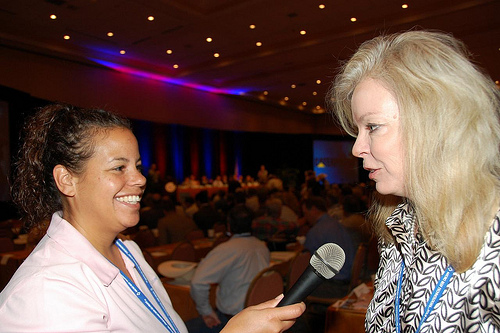
Robbie Baird LeValley is a fourth generation Colorado rancher whose ranch has been in the family for a long-time. She hopes it will continue to be in the family for many years to come and operates her business with this goal in mind. I had the chance to speak with her for a bit during the last day of the Cattle Industry Summer Conference and I asked her of all the things she had been following, what was most top of mind as it relates to her business.

“When we look at all the regulations that have been discussed this week, it’s the cumulative effect. Not only is it the dust and the water regulation from the EPA, it’s over-regulation,” said LeValley. “So we just ever need to be diligent at all levels and that’s why it takes good folks at the local, state and national level to make sure we’re all aware and make our voices heard.”

LeValley is making her voice heard at all levels and that’s why she is actively involved in the National Cattlemen’s Beef Association.

I asked her what she was most concerned about short-term and she said she is worried about the over reach of the GIPSA regulations. Mid-term she believes the industry needs to keep their eye on the EPA and their work on water quality.

In terms of future challenges, LeValley said they have to continue to show consumers that they produce a safe, wholesome product. And in terms of opportunities, she is most excited about young people coming back to the ranches.

Listen to my interview with Robbie Baird LeValley here:Bringing Young People Back to the Ranch

Photos from the conference are posted to this photo album: 2011 Cattle Industry Summer Conference Photo Album.
Ag Groups, Agribusiness, Audio, Beef, Cattle Industry Conference, NCBA

See the Difference Between Tilled and No-Till Soil

Cindy Zimmerman

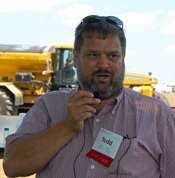
One of the stops on the 2011 CTIC Conservation In Action Tour in Ohio last week was the farm of Todd Hesterman in Napoleon, Ohio. Todd has employed continuous no-till on his 450 acre corn, soybean and wheat operation for 22 years and used yield mapping for more than 14 years and is a strong advocate for doing what he can to help water quality and “still stay in business.”

“Our water infiltration rates for heavy rains, we can definitely see an improvement in the quantity of rain water we can accept and not have standing water or running water off the service,” he said. “That’s the biggest improvement we see is soil health and soil quality.”
Listen to my interview with Todd here: Ohio No Till Farmer Todd Hesterman

To show the clear difference between tilled and no-till soil, USDA-NRCS Ohio state agronomist Mark Scarpitti did a little demonstration on Todd’s farm by dropping a chunk of soil that had been in no-till for several decades, compared to a similar chunk of tilled soil. You can see what happens in the video below.

CTIC 2011 Conservation in Action Tour Photos

AgWired coverage of the CTIC Indian Creek Watershed Field Tour is sponsored by AGROTAIN
Audio, CTIC, Environment, Farming, Video

Weatherbill Supplementing Federal Crop Insurance

Chuck Zimmerman

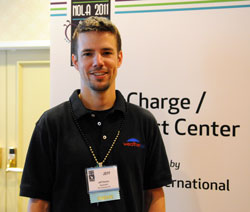
Jeff Hamlin is the Director of Agronomic Research for Weatherbill. At the Ag Media Summit I met Jeff and learned “what is Weatherbill?”

Jeff says “We provide weather insurance that pays farmers for the types of bad weather events that cost them yield.” He says their product is designed to work along with the federal crop insurance as a supplement to “cover the top end bushels that the federal crop insurance program can’t cover.” Weatherbill is currently available for a variety of crops. Jeff says one thing growers like is how simple the product works. You can fill out a form on their website to find an agent near you.

You can listen to my conversation with Jeff here: Jeff Hamlin Interview

2011 Ag Media Summit Photo Album

AgWired coverage of the Ag Media Summit is sponsored by BASF and AgHaven
Ag Media Summit, Agribusiness, Audio, Insurance

FMC Looking Ahead to 2012 For Anthem

Chuck Zimmerman

At the Ag Media Summit I stopped by the FMC booth in InfoExpo to find out what’s new. On hand was Matt Foster.

Matt says they’re very excited to be launching Anthem herbicide in 2012. That’s a grass and broadleaf pre-emerge for both corn and soybeans that has both pre and post activity.

I was out on field tour duty with FMC recently. You can learn more about Anthem and how it has been performing in trials from the York, NE event.

You can listen to my conversation with Matt here: Matt Foster Interview

2011 Ag Media Summit Photo Album

AgWired coverage of the Ag Media Summit is sponsored by BASF and AgHaven
Ag Media Summit, Agribusiness, Audio, Corn, FMC, Soybean

Jeff Smeenk Talks Environmental Ranching

Joanna Schroeder

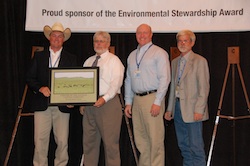
Did you know that grasslands evolve by being grazed? And that taking grazing out of the equation damages the environment? I didn’t until I sat down with Jeff Smeenk, one of six Environmental Stewardship Award Program winners announced during the Cattle Summer Industry Conference. Smeenk explained that on his ranch, cattle serve the niche of grazing the land and helping to keep the grasslands healthy and thriving.

The ESAP program recognizes cattle producers with outstanding environmental and conservation practices and I asked Smeenk how he came to be such an environmental steward and role model.

He answered that he was very fortunate to have parents that when he came back to the operation allowed him to run the operation the way he saw fit. “But I just started to become very environmentally conscious at a young age and I think the next generation of Americans are extremely environmentally conscious. I think it’s very important that we as producers do the right thing and then make sure that we let consumers know that we are doing the right thing.”

Listen to my interview with Jeff Smeenk here:Jeff Smeenk Talks Environmental Ranching

In South Dakota, where Smeenk’s family ranch is located, water is the limiting factor in his area, which has been in a drought for eight years. His ranch partnered with NRC and they helped him add a well, put in a pipeline, storage tanks, and water tanks. Utilizing other partners, he also fixed up some dams that had been damaged and now during drought years, water shouldn’t be such a make or break factor.

Conservation doesn’t necessarily pay itself back right away, but Smeenk said he is looking long-term and planning for several generations in the future. In his case, over the long-term his environmental and conservation efforts will not only save him money- but might even save his ranch.

Photos from the conference are posted to this photo album: 2011 Cattle Industry Summer Conference Photo Album.

Ag Groups, Audio, Beef, Cattle Industry Conference, Conservation, Environment, NCBA

Have You Registered for NAFB Convention Yet?

Cindy Zimmerman

Sure, it’s still the sweltering summer of 2011, but the cool days of November are just around the corner – so it is time to get that registration in for the 68th Annual Convention of the National Association of Farm Broadcasting (NAFB) November 9-11 in Kansas City, if you haven’t done so yet.
Here are the important links:

Preliminary Agenda

On-line registration form

Hotel Reservations – Westin Crown Center

Convention Sponsors

Want to be a sponsor? Contact Jennifer Saylor.

I better make sure Chuck has gotten us registered! See you there.

NAFB

Efforts to Reign in EPA Continue

Joanna Schroeder

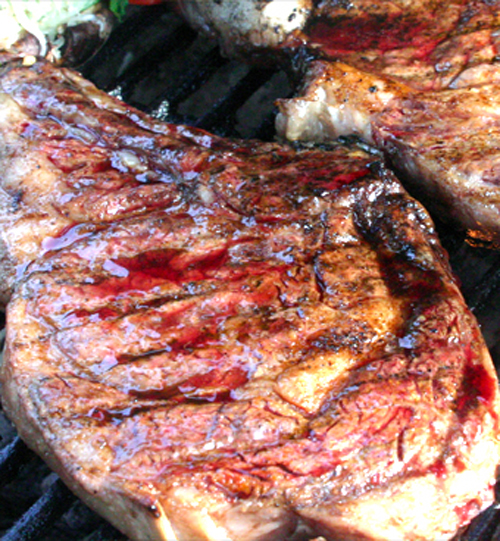
I asked National Cattlemen’s Beef Association (NCBA) President Elect J.D. Alexander some tough questions during the recent Cattle Industry Summer Conference. One such question was, “What is your favorite way to prepare your beef?” His answer – a bone in ribeye prepared on the grill. So I tried it out last night for dinner and boy was it tasty.

OK, so maybe that isn’t really a tough question but Alexander did tell me that the industry is facing some notable legislative issues such as trade issues, GIPSA rules and increasingly difficult environmental standards. So I asked him how does the industry overcome these challenges?

“The bottom line is we’ve got to work together on a state and national level to overcome these issues so we can do better what we do best and that’s producing high quality beef,” said Alexander.

I then asked him if the U.S. continues to create policies that make it more and more difficult to produce beef, how, when countries around the world are depending on U.S. farmers, are we going to keep producing the high quality protein so desperately needed to feed a dramatically growing population?

Alexander replied, “I think one of the things is obviously if they’re trying to do some regulation like that they must have a sense we’re not doing it properly right now. I’ve always said as far as the environment goes, we as producers are living off the environment. We grow the crops to feed to the cattle to grow the protein that can be fed to the nation’s population. So because we make a living off the land, we’re going to take care of the land.”

He continued, “I think part of the message is we’re not getting that message out. One of the greatest stories we have is the environmental stewardship awards. We go out to regions across the country and honor producers that are doing great things with how they are preserving and saving and enhancing the environment. We had seven picked at this conference and out of them one will be a winner.”

And NCBA will continue to showcase these forward-thinking cattle producers to help better tell the industry’s story with the goal of reining in some of these regulations that could keep America’s cattle producers from producing an invaluable product.

You can learn more by listening to my interview with J.D. Alexander: NCBA Helping to Create Export Markets for Cattle Producers

Photos from the conference are posted to this photo album: 2011 Cattle Industry Summer Conference Photo Album.

Ag Groups, Audio, Beef, Cattle Industry Conference, NCBA

RCA Trellis Growing System Turns Acres Into Profits

Joanna Schroeder

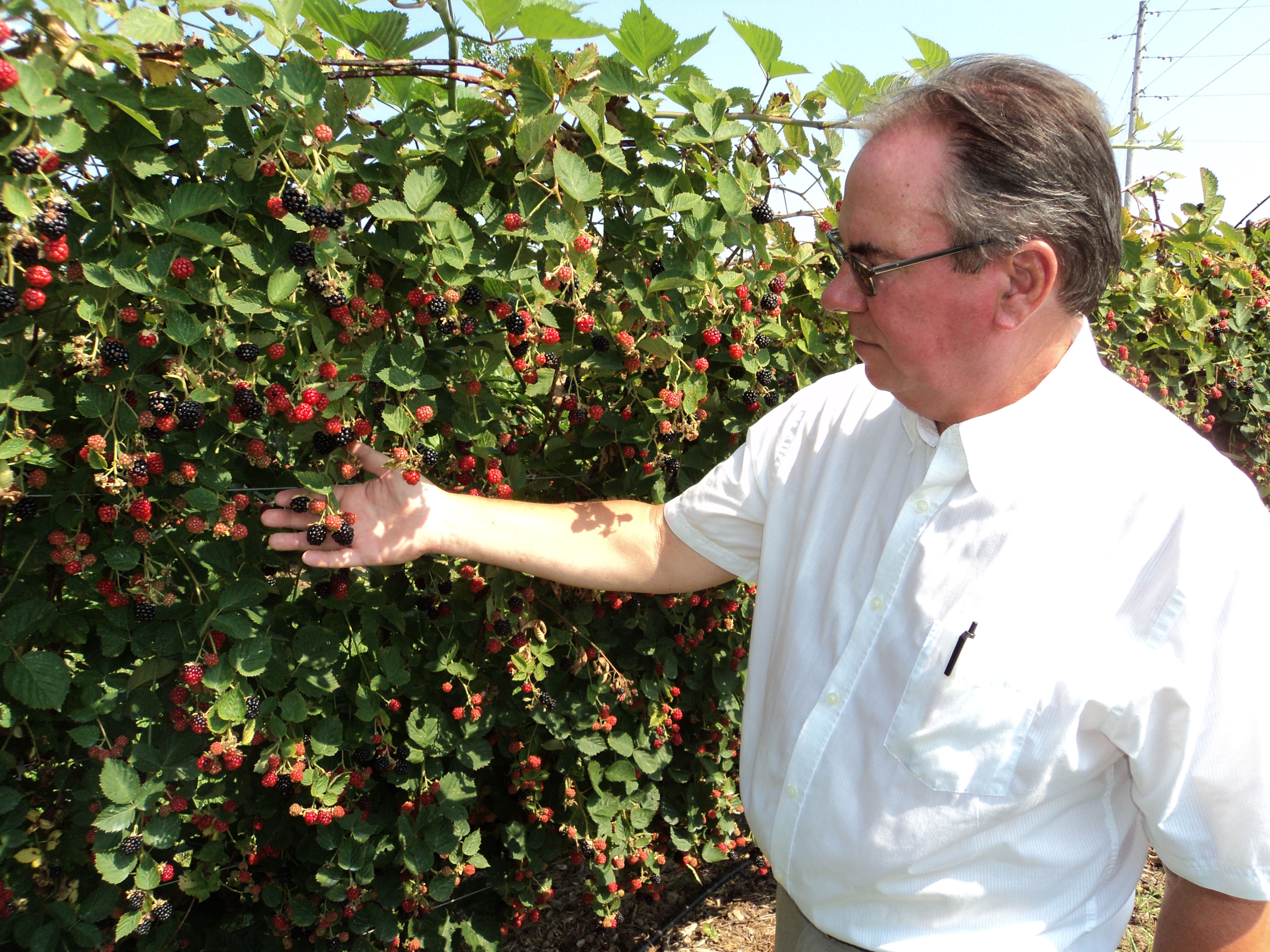
The RCA (Rotating Cross-Arm) System from Trellis Growing Systems is turning marginal land into profits for many Midwestern farmers who have begun to plant a new cash crop – blackberries. Developed by Indiana grower Richard Barnes, the RCA System enables Midwestern growers to successfully and profitably plant blackberries by overcoming some of the traditional challenges associated with the crop.

Barnes began experimenting with blackberries about 11 years ago and like most growers had issues with different aspects of their operation. He began to do research where he spoke with the USDA who was working on developing a trellis system. After receiving their first grant in 2007, Trellis Growing Systems was born and has since received several other grants.

For the most part, blackberry varieties will not survive the winters in the Midwest. Therefore most blackberries are grown in the more temperate climates of the southern Midwest and the majority of them are coming out of California. But with the development of the RCA System, the game has changed.

“With our technology, the RCA System, we can rotate the canes down near the ground in the winter and if necessary we can cover those canes with a floating row cover,” explained Richard Barnes, creator of the technology and founder of Trellis Growing Systems. “That enables the canes to survive the winter with little to no cane damage, and what this does is open up a whole new opportunity and industry for growers in the Midwest.”

Listen to my interview with Richard Barnes here: RCA Trellis Growing System Turns Acres Into Profits

Barnes said growers using this system have been able to earn $45,000+ in revenue per acre. One reason is that per flat prices are higher in July and August when blackberries are harvested in the Midwest, between $15 to $20 per flat. When the majority of blackberries are harvested in May or June in other regions, flat prices are around $12 to $13 per flat.

Trellis Growing Systems, along with Bedford (their manufacturing partner) will be showcasing their blackberry technology during the Farm Progress Show in Decatur, Illinois August 30-September 1, 2011 in booth 575. Barnes said growers can get a personal demonstration of the RCA System anytime during the show, or they can pre-schedule an appointment to learn more by calling him at 260-241-3128. You can also get more information on their website at www.trellisgrowingsystems.com.

Agribusiness, Audio, Farm Progress Show

Make Your iPad Do A Handstand

Chuck Zimmerman

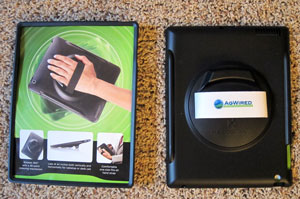
How about a customized “Handstand” for your iPad? I’ve been trying one out.

This is a new way to handle and hold your favorite tablet. They’re made for both the iPad and iPad 2. I’ve just started using the Handstand which is made by Hub International. Some of my first impressions include that it’s very sturdy and light weight. The strap stretches to fit your hand and helps you keep a firm grip on your iPad. I’m thinking this would be a good for those of you who may be considering using your iPad for some field scouting or to carry around in the cab of your truck or combine.

HandStand allows you to keep your hand in a comfortable position while turning the iPad for best viewing. It becomes an extension of your body as well as your mind. Hold it effortlessly, spin it portrait or landscape, display the screen to others — work, watch or play effortlessly. You’ll do more with your iPad and get more value out of your investment.

Hub International was founded in 2010 and the Handstand is their first consumer product. Founder Jaime Smith is currently president of Ritter Chemical, national distributor of high quality agrochemicals.

What do you think? Want one? Let ’em know on Facebook, Twitter and Youtube.

Equipment

Cold Feet

Melissa Sandfort

Maybe it’s a circulation problem, I’m not sure, but my feet are always cold. It can be 100 degrees outside and my toes can be ice cold in my flip flops. It’s a problem I’ve always had and a quite frustrating one!

The same holds true for my fingers. Maybe it’s an extremities problem.

Either way, electric blankets are no good because my overall body temperature gets too high, then I can’t sleep. Socks don’t work either – my feet get claustrophobic.

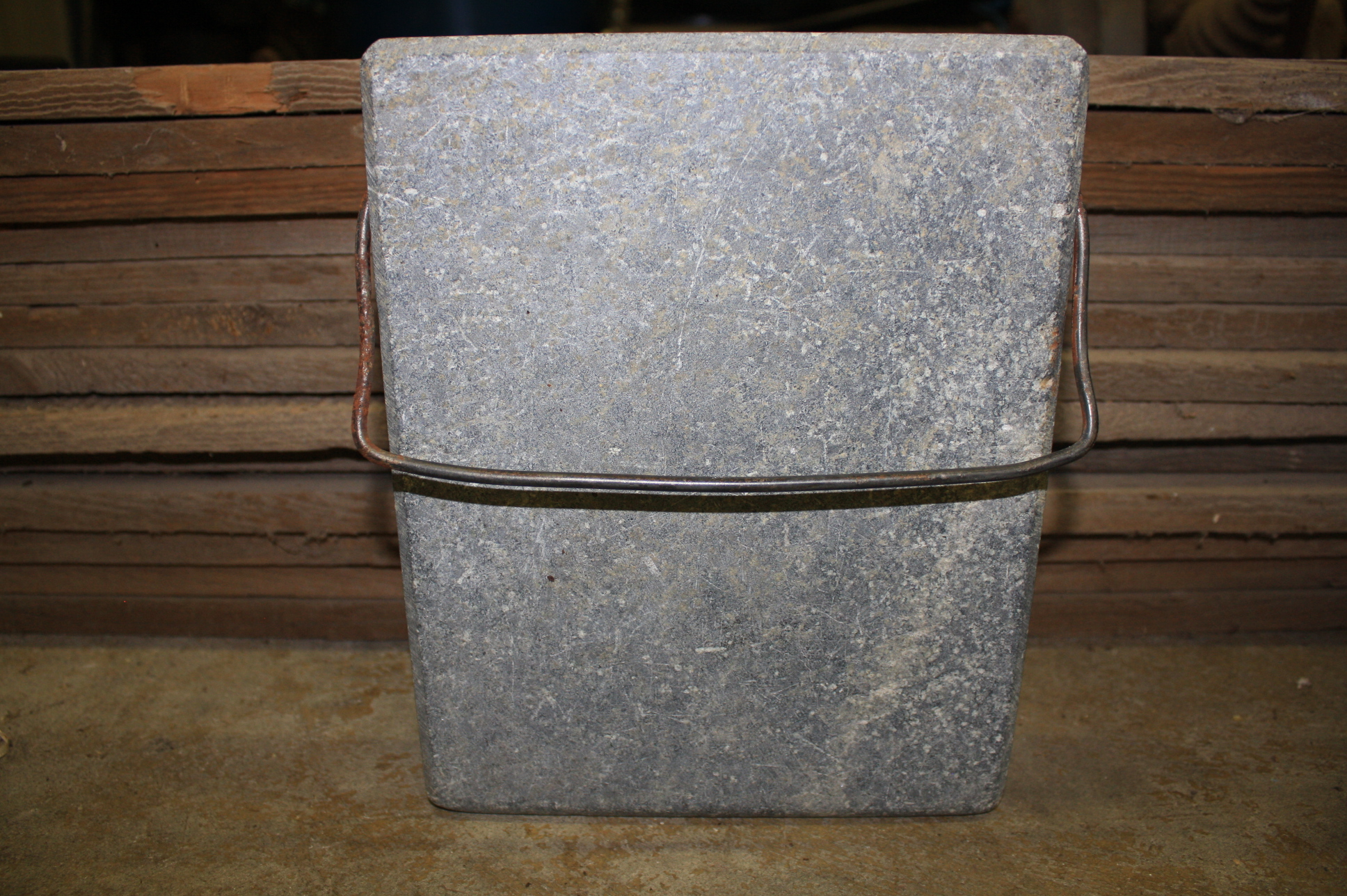
Maybe what I need is this soap stone. It’s a heavy stone that was heated in the oven, wrapped in a towel then placed next to your feet in bed. This was before central heat or boiler systems and floor heat like we have now. It was also used if you were headed out on a long road trip: heat this up and put it in the car on the floorboard to stay warm.

My husband might like it too so I don’t use his legs to warm up my feet!

Until we walk again …

Uncategorized