What Soybean Stakeholders are Learning at USSEC Meeting

Cindy Zimmerman

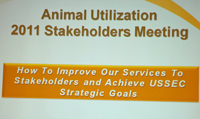
usb soybean exportsThe weather is fabulous in Seattle this weekend, but directors of the United Soybean Board (USB) are inside and hard at work learning more about opportunities for exports at the US Soybean Export Council Animal Utilization Stakeholders meeting.

As far as stakeholders are concerned, USB is one of the major ones represented here, since soybean checkoff dollars are used to fund the USSEC’s export promotion efforts. “I’m here to learn more about the world demand for protein for animal feeds,” says David Hartke, USB Director from Illinois. “Sitting on the Production Committee with USB, I’ve been asked to be the lead on the composition of the soybean and felt that I needed to be here.”

Listen to my interview with David here. David Hartke, USB Director

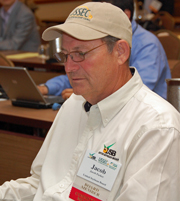
usb soybean exportsWhile all the USB directors I have featured so far are from Illinois, there are directors outside of the Midwest! One of them is Jacob Parker from North Carolina who says the export market for US soybeans is critically important for the industry, accounting for over half the production nationwide.

“We need to maintain that business,” Jacob told me. “We need to also make sure that our domestic crush continues and try to figure out ways to export meal as well as whole beans.”

Listen to my interview with Jacob here. Jacob Parker, USB Director
USSEC First Animal Utilization Stakeholders Meeting Photos

Audio, Feed, International, Livestock, Soybean, USB

USB Helps Direct Soybean Export Promotion Dollars

Cindy Zimmerman

usb soybean exportsThe whole purpose of the US Soybean Export Council Animal Utilization Stakeholders meeting this weekend in Seattle is to evaluate the international marketing program for animal feed use and explore ideas for the future.

One of the architects of the series of meetings that will be held in advance of program allocations for the 2013 budget year is United Soybean Board (USB) International Marketing Animal Utilization Subcommittee Chair Dwain Ford of Illinois. “By gaining the knowledge of the market we hope to be able to invest checkoff dollars more wisely and get a greater return on our investment for the farmers,” he said.

Listen to my interview with Dwaine here. Dwaine Ford, USB Director
USSEC First Animal Utilization Stakeholders Meeting Photos

Audio, Soybean, USB

Around the World at Soybean Export Stakeholders Meeting

Cindy Zimmerman

usb soybean exportsParticipants in the US Soybean Export Council Animal Utilization Stakeholders meeting got a quick trip around the world in about four hours Saturday morning with presentations on global opportunities for soybean exports for animal use.

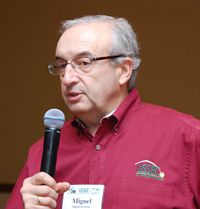
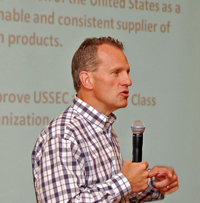
“We had 11 speakers representing eight different countries or regions,” said Miguel Escobar, USSEC Global Director of Animal Utilization. “We heard from all of them what kind of things they are doing in the marketplace for the future.”

Miguel says they wanted to let the stakeholders who fund the efforts of the USSEC know how their money is being spent. “The main two are the the Foreign Agriculture Service (FAS) of the USDA, the United Soybean Board (USB) and all the companies that are members of USSEC who have interest in animal utilization part of the business,” he said.

Miguel is very excited about the stakeholders meeting. “We are breaking the ground for what is going to happen in the future for animal utilization,” he said, noting that it represents an $18 billion segment of the U.S. soybean export market.

Listen to my interview with Miguel here. Miguel Escobar with USSEC
USSEC First Animal Utilization Stakeholders Meeting Photos

Audio, Feed, International, Soybean, USB

Soybean Board Leader at Stakeholders Meeting

Cindy Zimmerman

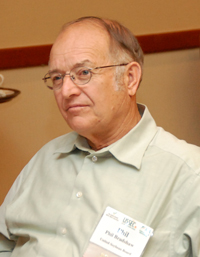
usb soybean exportsOne of the many United Soybean Board (USB) farmer representatives in Seattle for the first US Soybean Export Council Animal Utilization Stakeholders meeting is Phil Bradshaw, immediate past chairman from Griggsville, Illinois.

Phil has also served on the USSEC board and is on the International Marketing committee for USB and he is pleased to see this meeting taking place and where the USSEC is at today. “I think we’re on the right track and the future’s bright, I just think we’re really going to move a lot of soybeans and soybean meal in the future.”

Phil just announced that he is retiring from the United Soybean Board in December. “It’s been a lot of fun and it was kind of a sad day when I wrote Secretary Vilsack and said I would be resigning as of December 7, but I want to focus on some other areas,” he said. “We got a lot of great new people on the board who can come on and take my place.”

Listen to my interview with Phil here. USB Past Chair Phil Bradshaw
USSEC First Animal Utilization Stakeholders Meeting Photos

Audio, Soybean, USB

Soybean Animal Utilization Stakeholders Meet in Seattle

Cindy Zimmerman

usb soybean exportsThe first ever U.S. Soybean Export Council (USSEC) Animal Utilization Stakeholders Meeting is being held this weekend in Seattle to allow soybean checkoff farmer leaders to brainstorm about projects for the future to increase soybean exports.

“This is the first time we’re doing an animal utilization meeting,” said USSEC CEO Jim Sutter. “We’ve used aquaculture as an example and we’ve done that the past three years.”

usb soybean exportsJim says this the first meeting in a series to plan out projects for FY 2013. “So this is the first meeting to gather industry and regional inputs, then we’ll be working on strategy, and finally we come together and get final approval for all the projects we come up with,” Jim said. “That’s about a six month process and this is step one in the process.”

Presentations on Saturday morning included updates from soybean market representatives in all areas of the world on global opportunities for soybean exports in animal utilization.

Listen to my interview with Jim here. USSEC CEO Jim Sutter
USSEC First Animal Utilization Stakeholders Meeting Photos

Audio, Feed, Livestock, Soybean, USB

iPhone vs. Android/Thunderbolt

Chuck Zimmerman

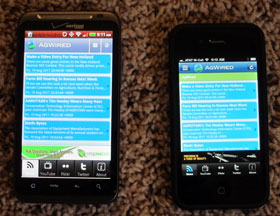
iPhone or Android? That is the question. It’s pretty easy to answer in my opinion. I’ve had an AT&T iPhone since they came out and earlier this year I got a Verizon HTC Thunderbolt (4G). The iPhone wins this comparison hands down. Even the AT&T network seems improved, which was a major complaint I used to have for it. Here’s a photo of each phone displaying the AgWired App (iPhone on right). Maybe when the Motorola Droid Bionic comes out I will change my mind.

So why do I think the iPhone is better? I think it’s much more user friendly. The camera is better. The size if perfect for my hand. The battery lasts much, much longer. There are more and better apps than you will find for Android. But one of the best things I’ve found is that when I tether my computer or iPad to it the connection seems to be rock solid and it’s not on my Thunderbolt. Maybe that’s a problem still with the Thunderbolt but I can’t use it tethered to my computer for more than about 15 minutes before it no longer provides an internet connection. Even when it is providing one it seems to blip in and out. For example, when I’m uploading photos using Flickr tethered to the Thunderbolt I will often get an error in mid upload. That never happens on the iPhone. I love the speed of 4G on the Thunderbolt when I can find it. However, I’ve had several instances of having a good 4G signal and all of the sudden it disappears and I’ve only got 3G. At that point I might as well be using my iPhone.

Apps seem to crash more on the Android. I use the Weather Channel app a lot. On the Android it will not show me maps. It just crashes with an error report. I’ve uninstalled it and started over with the same problem.

The Thunderbolt eats battery. Even if I don’t use it for a day it will be out of battery and that’s with all services like bluetooth, wifi, etc, turned off. It has to be charged constantly. And you can’t use it tethered with 4G unless it’s plugged in. I can sometimes go two days without charging the iPhone depending on use and I’d call myself a power user.

I like to text on my iPhone with one hand. The Thunderbolt is just too big for that. I’m sure there are other Android phones out there that would be slimmer. I just doubt they’d perform any better than the Thunderbolt when it comes to user friendliness. I like being able to put my apps into folder and not have a lot of screen space to scroll through to find what I want.

I thought this would be a good pre-AgChat Agvocacy 2.0 post since I’ll be on a panel talking about using mobile technology to enhance productivity. When it comes to using apps on these phones the ones I use most are for email, Twitter, weather, camera, music, texting, contacts, calendar and oh yeah, the phone. I also do quite a few of my on location interviews with the iPhone too. I’ve also started doing most of my video clips with the iPhone. Then I can just upload them straight to YouTube when I’ve got a good wifi connection. As a road warrior the iPhone seems to help make me more productive than the Thunderbolt. I hope this helps. Let me know if you’ve got questions.

Equipment

Make a Video Entry For New Holland Boomer 555 Contest

Chuck Zimmerman

There are some great entries in the New Holland Boomer 555 Contest. This social media driven promotion we’re helping with is going well. Who wouldn’t want to win a 5 year lease on a new Boomer 30 compact tractor with front end loader? We’d like to see some video entries. How about it? Got some creative juices flowing? Get out your camera, go on location on your property and tell New Holland what you’d do with a Boomer. All you have to do is upload your video to YouTube (or other video service) and enter the “Share” link in the Official Entry Form. Easy. So easy that I had to make a video just to help get things rolling.

New Holland, Tractor

Farm Bill Hearing In Kansas Next Week

Chuck Zimmerman

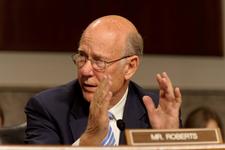
I’ll bet we see this look a lot next week when the Senate Committee on Agriculture, Nutrition & Forestry holds a hearing titled, “Looking Ahead: Kansas and the 2012 Farm Bill.” Ranking committee member Senator Pat Roberts will be hosting. He sort of set the tone for the hearing in a letter to President Obama in advance of next week’s event. Click on the link for the full letter to see the list of regulations that will be addressed.

Dear Mr. President:

I write to provide you with insight into actions your Administration is considering that could negatively impact rural America.

At a town hall meeting you hosted in Illinois earlier this week, a farmer expressed the concerns of many producers related to proposed regulations and directives impacting their farming operations. You asked the producer if there was a specific issue concerning him. He mentioned issues including dust pollution, noise pollution and water runoff. You responded, “Yes. Here’s what I’d suggest is the – if you hear something is happening, but it hasn’t happened, don’t always believe what you hear.” You then went on to imply that many of these concerns were created by lobbyists and associations in Washington.

I want to assure you that this farmer’s concerns are justified. To better inform you about the actions being taken by your Administration, included below is a list of proposed rules, directives and actions impacting rural America since your inauguration. While this list is not complete or comprehensive, it provides an overview of the increased regulations and resulting costs American agriculture and rural America face due to actual or proposed actions taken by federal agencies under your direction. The partial list of concerns is as follows:

GIPSA Rule Impacting Livestock Producers – USDA has proposed a new regulation for livestock marketing that will undo years of progress and innovation in the livestock industry. Many of the provisions of this proposed rule were rejected on a bipartisan basis during debate on the last Farm Bill, which was signed into law when you were serving in the United States Senate. (find the rest of the letter here)

The meeting will take place Thursday, August 25 2011, 9:00am – 12:00pm at the Hilton Wichita Airport Hotel, 2098 Airport Road, Wichita, KS 67209. You may participate in the hearing by submitting written testimony which will be included in the official record of the hearing. A copy of your testimony can be submitted at the hearing or can be sent to the committee no later than Sept. 1. Send your testimony to aghearing@ag.senate.gov or to U.S. Senate Committee on Agriculture Nutrition and Forestry, 328A Russell Senate Office Bldg, Washington, D.C. 20510.

Farm Bill

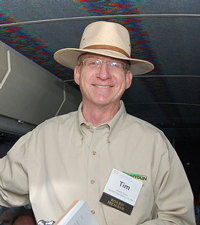
AGROTAIN’s Tim Healey Wears Many Hats on CTIC Tour

Cindy Zimmerman

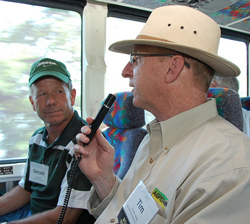
Conservation Technology Information Center (CTIC) past chairman Tim Healey of AGROTAIN wore many hats during last week’s 2011 Conservation In Action Tour, including bus monitor, sponsor, interviewee and interviewer.

“We’ve been doing this for five years now and each year the conservation tour gets better,” Tim told me at the end of the tour in northwest Ohio. “We hear from farmers who are really dedicated to instituting conservation practices to make sure that the majority of nutrients they apply in the field stay in the field.”

Listen to my interview with Tim here: Tim Healey of AGROTAIN on CTIC Tour

The tour had a record number of participants this year, over 200, and many of them were farmers who had the chance to learn about conservation practices from other farmers. During time on the bus, Tim did an interview with one of the farmer participants, Gerald Heck of Monroe, Michigan.

Tim asked Gerry why he decided to come on the tour. “Couple of reasons,” Gerry answered. “The opportunity to gain more knowledge about conservation tillage and the six CCUs also were a nice incentive since I’m a CCA.” Gerry says he does use continuous no-till in some fields. “Started no-tilling back the late 80s, with soybeans, then wheat and finally corn, as the equipment became available,” he said. “We moved to no-till to save on fuel and wear and tear on our iron.”

Listen to Tim’s interview with Gerry here: Tim and Gerald Heck

CTIC 2011 Conservation in Action Tour Photos

AgWired coverage of the CTIC Indian Creek Watershed Field Tour is sponsored by AGROTAIN
Audio, CTIC, Farming, Fertilizer

Zimfo Bytes

Melissa Sandfort

Zimfo Bytes