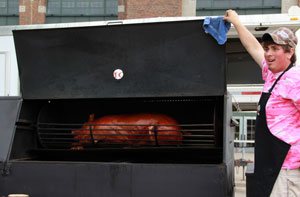
 From the whole hog on down to the pork bellies, there’s tons of pork served each year at World Pork Expo, but there’s also plenty of future pork on the hoof around as well.
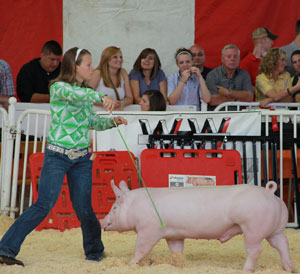
The annual WPX Junior National show features young people, who might possibly one day be pork producers, and young hogs, who very likely will one day be pork. And it’s a beautiful thing! You can see some photos of the champions and a list of all the winners in each category on the National Swine Registry website and on the NSR blog.
 The gestation stall issue was a shadow hanging over the expo this year, just the latest in attacks against the pork industry totally led by HSUS, which even tweeted under the #NPPCWPX hash tag this week – “It’s time the pork industry make plans for getting rid of gestation crates. Pigs & farmers both deserve better.”
If it were up to HSUS, there would probably be no Junior National, or any Pork Expo, for that matter. Reporter Sandhya Dirks of Iowa Public Radio did a story today titled “Is the Agriculture Industry Being Bullied?” about an aspiring young livestock producer who feels he may not have a future in the industry because of HSUS. In an interview with the reporter, HSUS president Wayne Pacelle denies that he wants to eliminate animal agriculture, but then goes on to compare livestock farming to slavery.
“Who’s really the bully when people are taking advantage of animals?” Pacelle says, adding that he doesn’t think the differences between animal rights activists and animal agriculture one of those things where “the truth is in the middle.” “I don’t think the truth was in the middle when our nation fought about child labor or slavery,” he said.
Pacelle also accuses the aspiring producer of adopting “the party line” and predicting that the young man’s attitudes will be totally different in five years, “because there’s no future in holding the line on confinement crates.” Sounds like a threat to me.
The young people who raise livestock for shows pamper those animals and often become very attached to them, but they know very well that they will someday be food on someone’s table. I’m reminded of a line from a very funny video from a British TV program that shows vegetarianism from the other point of view – “Pigs are expensive, pink and annoying – they’re also delicious.”
2012 World Pork Expo Photo Album










 It’s time to wrap up my coverage of the