Beefgiving Season in Australia

Chuck Zimmerman

This video is the work of Meat & Livestock Australia. I think it is probably more amusing if you know Australian politics since it is supposed to poke fun at two Australian politicians who rarely get along. Let me know if you know who they are in comments. But I guess there is a new season in Australia – Beefgiving Season.

Beefgiving Season is turning the coldest season of the year into the warmest. Find out how you can warm up your own relationships this Beefgiving Day, July 14th at www.beefgivingseason.com.au.

We’ve cooked up a way to warm up winter’s coldest day.

A way to turn the year’s chilliest day into the warmest, as we heat cold relationships with hot meals of Beef.

So invite them all over for a hearty Beef meal this July 14th.

Because when it comes to warming up Australia, nothing beats Beef on Beefgiving Day.

Ag Groups, Beef, International

Zimfo Bytes

Melissa Sandfort

    Zimfo Bytes

  • Four executives from across the food and agribusiness value chain have been elected to the Board of Trustees of Farm Foundation.
  • The Beef Checkoff Program issued the call for entries in its annual National Retail Beef Backer Awards.
  • Alltech officially unveiled the new Lyons Farm brand which will offer consumers natural, high quality foods.
  • The Hall of Fame Committee is asking for nominations for present, past or deceased NAFB Broadcast Council members that have made a significant contribution to the farm broadcasting industry. Forward all nominations to the 2012 Hall of Fame Chairman Mike Adams at host@agritalk.com.
    Zimfo Bytes

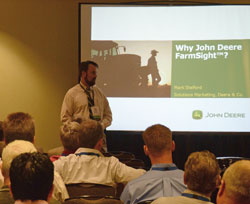
    Insight into John Deere FarmSight

    Chuck Zimmerman

    When it comes to FarmSight, Jerry Roell has the insight. He’s John Deere’s Director, FarmSight, Intelligent Solutions Group. Jerry says they began developing FarmSight about two years ago looking at three areas. The first of these is machine optimization and trying to figure out how to make machines more efficient, more productive and to monitor machine help. The second area of focus is logistics since farms are growing and their customers are having to manage a growing fleet of machines. The idea is to improve communications including how machines “talk to each other.” The third of focus is decision support to help make it easier for customers to make decisions.

    Jerry provides some examples of specific products/services that have been developed as a part of this process including the recently launched MyJohnDeere.com.

    You can listen to my interview with Jerry here: Interview with Jerry Roell

    John Deere FarmSight Tech Summit Photo Album

    Agribusiness, Audio, John Deere

    Ag in the Cloud

    Chuck Zimmerman

    You are hearing a lot about working in the cloud these days. Why not the agribusiness industry? Onsite, fueled by AgIntegrated, has an answer to the question.

    Onsite provides the connections you need to handle 21st century farming. As a consumer of an increasing amount of agricultural information and technologies, you experience the headaches involved in managing separate systems. Onsite combines cloud, desktop, and mobile technologies with the Onsite Relay, a wireless data transfer device, to provide a low barrier to entry, professional toolset to connect your world.

    In today’s connected world, linking people through mobile technologies and software is essential to maintain or increase productivity. Onsite accomplishes this for agriculture by bridging the communication gap between agricultural software and the network of individuals that drive agriculture on a daily basis.

    By directly connecting into many of the most well respected precision ag software, equipment telematics, and agronomic resource systems in our industry today, Onsite helps you to organize and communicate the valuable information you manage throughout the season.

    Agribusiness, Internet

    Some Still Optimistic About a Farm Bill

    Melissa Sandfort

    Our latest ZimmPoll asked the question, ” When do you think Congress will complete a Farm Bill?”

    Our poll results: Twenty-two percent were optimistic and said before Sept. 30, 2012; twenty-eight percent were a bit more hesitant but said before the end of this calendar year; and twenty-five percent said both next year and maybe never.

    Our new ZimmPoll is now live and asks the question, ” How will Obamacare affect you and your business?” Some of the farm groups are split on the ruling, just as was the Supreme Court. But on a more personal/business level, how will this ruling affect you?

    ZimmPoll is sponsored by Rhea+Kaiser, a full-service advertising/public relations agency.

    Farm Bill, ZimmPoll

    Looking Ahead in July

    Chuck Zimmerman

    We hope you had a great 4th of July holiday. Back to work now, right? Well some people are just calling it a long holiday weekend . . . This was the best photo I could get out of my iPhone last night at the Pensacola fireworks btw.

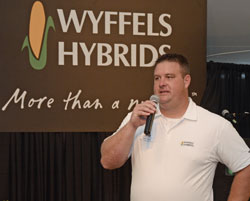
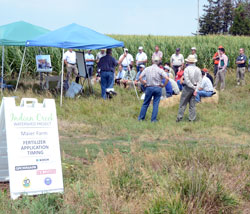
    The ZimmComm team is gearing up for a busy summer on the agriblogging highway. Some of the events you can find us at this month include the CTIC Indian Creek Watershed Tour, Wyffels Field Day, FMC Plot Tour, International Precision Agriculture Conference, Southern Peanut Growers Conference, American Ethanol 225 and STP 300 at Chicagoland Speedway, Raven Innovation Summit and the Cattle Industry Summer Conference.

    We’re looking forward to seeing many of you at one of these events!

    ZimmComm Announcement

    Private Companies Also Worried About USDA Cuts

    John Davis

    Previously, we talked about how USDA officials are concerned about how possible budget cuts will affect their ability to keep providing the timely, accurate reports on which so many farmers depend. And they’re not the only ones concerned. In our continuing series looking at the recent Farm Foundation webinar on data collection, we hear from Paul Hughes of Nestle Purina PetCare, who makes a baseball analogy about just how important USDA is.

    “The USDA is the global unbiased umpire of the grains and oilseeds markets,” Hughes told those listening to the hour-long webinar. He went on to cite the example of Don Denkinger, the major league baseball umpire who admittedly made a bad call (especially if you are a St. Louis Cardinals fan) in the 1985 World Series and possibly cost the Cardinals a championship that year (but Kansas City Royals fans might dispute that). He said in the game of commodity markets, USDA is looked upon to give good, unbiased information and sometimes only gets attention, just like Denkinger, when the reports are controversial or unexpected.

    Hughes said it comes down to Economics 101: having equal information for all parties. He worries that if USDA is not able to provide these reports (due to possible budget cuts) equally to all market participants, then that information might only come from parties with vested interests in the outcomes. He cited the case of Indonesian palm oil, the most commonly consumed vegetable oil in the world. That country produces half of the world’s palm oil supply, but provides the world with no data on production stocks or consumption. “What this does is leave the market ripe for all sorts of manipulations by those with the best independent information.”

    Hughes said USDA levels the playing field for all producers, especially the small ones. And he says this unbiased information must be preserved.

    You can here more of what Hughes had to say here: Paul Hughes, Nestle Purina PetCare during Farm Foundation Webinar on Data Collection

    Plus, his slide show to go along with the audio is available here.

    And you can hear the entire hour-long Farm Foundation webinar here:
    Farm Foundation Webinar on Data Collection

    Audio, Farm Foundation, Markets, USDA

    Modern Luxuries

    Melissa Sandfort

    Here I go again, thinking about the past and appreciating (to the utmost extent these days, appreciating and LOVING the A/C) the modern luxuries that we have. Our second child is expected to come along here in about four short weeks and with the weather in southeast Nebraska, I will be the first to admit that I’ve become accustomed to being inside the majority of the day and doing my gardening when the trees shade over my raised beds. I guess I’ve developed pretty thin skin.

    Also having lived in the city for 15 years, driving 45 minutes one way to get to a volleyball game was no big deal. Living where we live now, I have to drive at least an hour to the nearest “big” grocery store and again, it’s just part of loving the life and place where you live.

    With child #2 on my mind, I also think about car seat safety and proper installation, then remember stories I’ve heard of children “back in the day” riding in the car in a shoebox on the floorboard. Or another story: My husband has a ’69 truck and my mother asked if we buckled our son in the other night when we went for a drive. My answer? No…it doesn’t even come with seat belts!

    Where am I going with all of this? In the town my grandfather was raised, a trip to Lincoln was an all-day excursion on dirt roads at 30 mph tops and it took 2 ½ hours just to get there (it was only 75 miles away!).

    Listen to my grandfather’s AgWalk as he recalls a certain “experience” he had in the Model T. Listen to Grandpa explain

    I think I’ll go check the car seat handbook now.

    Until we walk again …

    Uncategorized

    Zimfo Bytes

    Melissa Sandfort

      Zimfo Bytes

    • The United Fresh Foundation is now accepting applications for the 2012 Frieda Rapoport Caplan Family Business Scholarship Program.
    • The Association of Equipment Manufacturers and DTN/The Progressive Farmer announced that DTN University will be held at AG CONNECT Expo & Summit in 2013.
    • USPOULTRY’s Women’s Leadership Conference, held August 16-17 in Florida, will focus on providing professional development and enhancing leadership and management skills.
    • Pioneer Hi-Bred has entered into an exclusive agreement with Bayer CropScience to provide EverGol Energy fungicide seed treatment to growers planting Pioneer brand soybeans, beginning with the 2013 growing season.
      Zimfo Bytes

      USDA: Environment Not Conducive to Public Info

      John Davis

      At a time when farmers rely more and more on good information, officials at the USDA worry that budget cuts are going to make their job of providing information to those farmers more difficult.

      “We were being stressed right now in an environment not conducive to public information,” said Joe Prusacki, Director, Statistics Division, at the USDA’s National Agricultural Statistics Service (NASS) during a recent webinar hosted by the Farm Foundation. Prusacki said while the U.S. Congress’ joint budget committee has increased the amount of money to NASS to $158.6 million (more than the $149.5 million passed by the House and $152.6 million passed by the Senate), it’s still less than what his agency asked for and leaves them with some hard decisions about what to keep and what they’ll have to cut. He said they can either reduce the number of reports or reduce the number of inputs and sample sizes, and thus the quality and accuracy, to those reports. Neither one is a very palatable proposal for either the USDA or producers who rely on those reports. But he says there are six core reports they’ll continue no matter what: 1. the quarterly hogs and pigs survey; 2. the monthly cattle on feed survey; 3. the prospective plantings/acreage report; 4. grain stocks; 5. crop production and; 6. monthly prices.

      Prusacki went on to point out that another problem NASS has is knowing who uses this data.

      “With the way data are provided today via the Internet, there’s not that personal connection, and many times, we don’t know who our data users are until we have program changes,” he said. Prusacki added there is also a disconnect between providers of information to the USDA and those who use that information when NASS puts it back out for consumption. He says while producer GROUPS are interested in providing good, accurate information, individual farmers sometimes see it as an intrusion to their privacy. And that leads to lawmakers asking if his agency really needs that information and if certain programs need to exist… and thus, the budget issues NASS now faces.

      You can here more of what Prusacki had to say here: Joe Prusacki, USDA NASS during Farm Foundation Webinar on Data Collection

      Plus, his slide show to go along with the audio is available at this link.

      And you can hear the entire hour-long Farm Foundation webinar here:
      Farm Foundation Webinar on Data Collection

      Audio, Farm Foundation, Markets, USDA