The time has come to winterize your equipment from the fall months of harvesting, tillage and fall application. As the season comes to an end, it’s important to take care of your investments, whether it is harvested crops, machinery or your precision equipment. Here are some helpful hints from Ag Leader’s tech support team:
Harsh temperatures can lead to problems if the necessary precautions are not taken to keep your monitor in working order. Cleaning the touch screen of your display should be the first step you take in preparing for winter. When dust accumulates on the display it can cause damage to the touch screen. If you have a dirty screen, we recommend cleaning the screen by blowing the screen off using non-direct air. Also, you can use Windex or an electronic cleaner with a soft, non-abrasive cloth to wipe down the display screen. Most importantly, remember to never spray the screen directly with cleaner but instead spray the cloth used in your cleaning process. Finally, remove the display from the vehicle. The preferred place to store a display would be inside the house, in a dry location. A heated shop is also acceptable. Displays can be stored in a large Ziploc bag, or any other sealed container. We recommend this because it will keep unwanted moisture from causing damage to the display.
 Customers using yield monitoring systems, require a couple more steps before being completely ready for winter. Begin by cleaning out your EMU (Elevator Mount Unit) on your clean grain elevator. Pull out the two retaining pins located at the bottom of the EMU and thoroughly clean out the chamber inside remembering to check for any obstructions in front of the proximity switch.
Removing the flow sensor mounted at the top of the clean grain elevator and placing it in a sealable container is strongly recommended. The reason we suggest this step is due to a soft protective potting material used on the load cell of your flow sensor which can be easily damaged by rodents. Rodent damage happens to flow sensors more than you think, so don’t let them get to the flow sensor. You should also run through the cabling located on your combine as suggested earlier to identify any issues you may have.
Read More

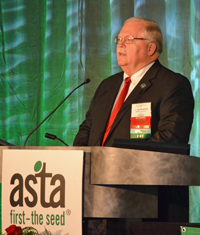 Finally caught up with American Seed Trade Association (ASTA) chairman Craig Newman as I was heading out of the hotel to go home Friday morning so I caught a quick interview.