
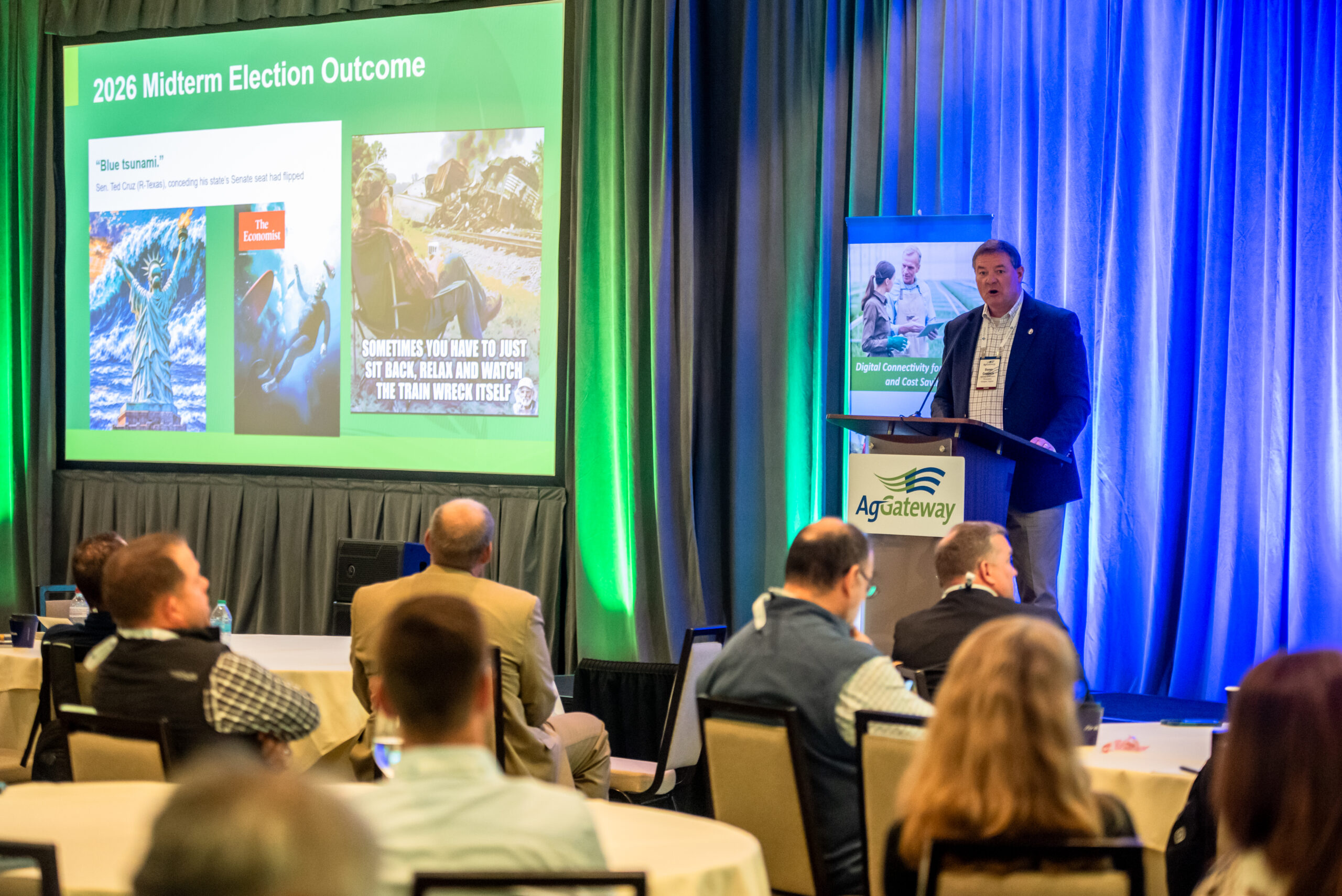
ARA CEO Daren Coppock addresses AgGateway annual conference
Coppock noted that Democrats holding significant majorities in both chambers will change both the issues that can advance and the tactics needed to advance them. “The common ground that you can achieve with a Democratic majority is different than what you can achieve with a Republican majority,” Coppock observed.
Before the new Congress is seated, the lame-duck session remains the immediate focus. Coppock listed completion of the farm bill, possible bridge funding to help producers cope with high input and fuel costs alongside low commodity prices, the highway bill, and government funding before the Dec. 11 deadline as top priorities. He expects the funding question to be resolved through a continuing resolution that carries into next spring rather than full appropriations bills, given the lack of Senate committee action.
Looking into 2027, Coppock said any unfinished farm-bill work and permitting reform will move to the top of the list. On pesticides and innovation, he described an unexpected challenge that has already surfaced under the current administration because of MAHA-related influence inside the White House. “Where that ball lands next January remains to be seen, but I don’t think it’s going to be easier,” he said, adding that the industry will need to recalibrate its approach once new committee leadership and member priorities become clear.
Coppock also reminded attendees that ARA’s own Amplifying Ag Retail Annual Meeting & Expo is set for Dec. 1-3 in Austin, Texas. The program will feature sessions on artificial intelligence, trade, data insights, and biologicals.
Learn more in this interview.
Interview with Darren Coppock, ARA 6:51