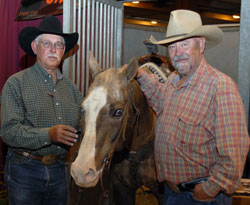
- The National FFA Foundation and Toyota Motor Sales, USA, Inc. are proud to announce the arrival of the Red, White, and Forever Blue College Tour at the University of Nebraska. The college tour will appear at five major NCAA college football games across the country this fall, premiering at the University of Nebraska. The tour celebrates more than 30 years of shared service in improving agricultural education and communities for FFA and Toyota. This unique networking event provides collegiate agricultural students, faculty and staff an opportunity to connect with each other. In addition, they will get to meet Nebraska Ag alumni, FFA student leaders from local high schools and FFA and Toyota staff within their community. The tailgate kicks off four hours prior to the much-anticipated Nebraska vs. Iowa State rivalry on Sat., Sept. 29 at Hardin Hall on Nebraska’s East Campus. There will be free parking for guests as well as a free shuttle providing transportation to and from the game. Toyota, with their continued support of FFA, has dedicated a number of their Tundra trucks to be onsite.
- While corn rootworm pressure is not consistent across the country, concerns of how continuous corn will impact future crops are universal. That is why it is key for growers to check performance in the field this summer, to make an informed decision when choosing hybrids for next year. To best protect yield potential, agronomists recommend growers choose hybrids that will perform on their ground and have traits that make sense for their operation. In areas with chronic insect issues, it is best to select hybrids with resistance to European corn borer and/or corn rootworm, such as those with Agrisure® traits. In continuous corn systems, corn rootworm particularly contributes to yield loss by damaging the stalk and roots, disrupting the photosynthesis process and interfering with pollination. In 2006 Syngenta Integrated Trials, Agrisure RW corn seed provided a 34 bu/A yield advantage, when compared to the untreated check. For the 2008 planting season, NK will be offering more trait and stacked choices for insect control and weed management than ever before, including Agrisure 3000GT. This new quad stack includes glyphosate tolerance, European corn borer resistance, corn rootworm resistance and LibertyLink® technology with tolerance to LIBERTY® herbicide (glufosinate).
- On Sept. 18, 2006 Hoosier Ag Today began broadcasting its unique programming on 20 radio stations across the state. Hosted by veteran farm broadcaster Gary Truitt, Hoosier Ag Today filled a void in Indiana agricultural communications. Hoosier Ag Today focuses on the dynamic growth taking place in Hoosier agriculture. Hoosier Ag Today also experienced unexpected growth this past year adding 10 new stations to its station line up. Shortly after launching the Hoosier Ag Today radio programs, HAT launched its multi-media Web site. This site included the Official Podcast of Indiana Agriculture. Early in 2007, Hoosier Ag Today began publication of a daily E-mail newsletter.
- This summer saw an explosion of glyphosate-resistant weeds throughout the United States, and the challenge continues to grow. In August, Kansas became the first state to confirm four species resistant to glyphosate, including waterhemp, common ragweed, giant ragweed and marestail (horseweed). These populations generated from the sole use of continuous glyphosate over several years and were not confined to just one field, but rather spread throughout the state as well as other parts of the Midwest. With fall just around the corner, and weeds in a growing number of states showing resistance to glyphosate, it’s now more important than ever to develop a strategy for your farm. Learn more about glyphosate resistance: 1, 2, 3, 4.
- INFINITE INFLUENCE – an annual conference sponsored by World Christians United, the student missions organization of Saint Louis Christian College. The 2007 Conference on Sustainable Agriculture and Missions will be held at Saint Louis Christian College, Oct. 26-27, 2007. Conference Purpose: To promote dialogue about sustainable agriculture and business-as-mission that will expand and promote the college’s Intercultural and Urban Missions degree program offerings; increase interest and involvement among the college’s constituents; generate enthusiasm for, and awareness of, the college among our publics; advance the college’s partnerships with other educational organizations; and stimulate creative ideas for future projects involving missions and agriculture. There is only room for 250 participants, so please register early. The cost of the Conference is $50, which includes all meals. For more information, contact Dean Dittmar at ddittmar@stlouisagclub.org or (618) 257-8272.
Sendai Shopping
Cindy and I have had a very relaxing stay in Sendai the past two days. We’ve wandered around town, including the Sun Mall Ichibancho. It’s a big shopping mall that goes on for blocks in every direction.
This big clock plays music on the hour and the doors open and things move. I don’t know what it meant but it was interesting to say the least.
We also visited the Yodobashi Camera Store next to the Sendai Train Station. Think Bass Pro Shop of electronics stores. I’m going to try to get a group to go over tomorrow morning for a little shopping venture.
We’re talking two stories of nothing but all the electronics gadgets you could dream of and can’t even find anywhere else and they stock it. I think a couple of the people in our group are hoping to purchase a camera while they’re here. This is the place to go.
The Rice Man
This is one of the workers at the Furukawa Agricultural Research Center. He was posing for us ag journalists so I’ve got to post him for you.
Cindy and I both like rice and we’ve noticed that people do eat it for breakfast as well as other meals during the day. It mostly seems to be white rice and not what we call “wild” rice which raises a nutrition question I would think. We’ve been hearing a lot about nutrition concerns during our trip and this might be something that people are going to have to deal with if they want to improve their diet. I guess this is a worldwide issue.
This post kind of gets me caught up for now. We’re going to be joining people for dinner tonight as they return from their various tours that started yesterday. I’m hoping to obtain some photos from each one to share in the photo album too.
Cindy just got done being interviewed by the main organizer of the Congress here, Masaru Yamada. It was interesting listening in while I was doing my posts. He was especially interested in Cindy’s thoughts on policy since she was just at EU headquarters in Brussels last week.
Precision Agriculture in Rice Planting
Precision agriculture is hitting the rice industry in Japan. At least it’s in R&D now at the Furukawa Agricultural Research Station.
I interviewed Yoshisada Nogasaka, Research Team for Farm Machinery and Systems for NARC, the National Agricultural Research Center. He’s the guy who’s developing the software to run the prototype Autonomous Rice Transplanter we saw on demonstration at the Furukawa Agricultural Research Center. This guy is enthusiastic to say the least. He says that when he demonstrates this thing on a farm the farmer asks, “Can you leave it here on my farm?” They’re really looking forward to it but they’ll have some waiting to do. He says it could be up to 10 years before commercial production.
You can listen to his remarks here: ifaj-07-rice-planter.mp3
Japan Ministry of Agriculture Press Conference
During our visit to the Tokyo University of Agriculture we attended a press conference with Mr. Masanori Sato, Director General in charge of International Affairs, Japan Ministry of Agriculture.
I’ve got a video of his presentation so you can see him make a statement and then listen to the interpreter. In this segment he talks about the dietary policy and situation with Japanese consumers. I was interested to find out that Japan only supplies about 40 percent of their food needs. This is obviously of concern when it comes to trade. The presentation didn’t leave much time for Q&A, which might have been a good thing considering the turmoil recently in the Ministry. Primarily he gave an overview of Japanese agriculture.
Planting in a Rice Paddy
This is the way people have transplanted rice into paddies for who knows how long. That’s changed a lot now that machinery has been built to make the task much easier and faster.
When I interviewed one of the officials with the National Agriculture and Food Research Organization he asked me why man invented machines. I was stumped so he answered for me. “To do the work for us.” Right. And when it comes to this type of work I can see why you’d want a machine. The mud in the field is necessary but looked difficult to walk in.
We got to watch a demonstration of a machine with a man at the wheel but the main attraction was a prototype of a new GPS-guided planter. I’ll have more on that in another post.
One thing is obvious and that is that what we call precision ag is making it’s way around the world with applications in all types of farming. This stop at the Furukawa Agricultural Research Station was the highlight of our long travel day.
Leaving Tokyo Station
We moved on from Tokyo to Sendai via Furukawa on Wednesday. Moving a couple hundred people through a crowded train station is not an easy task. The Japanese journalists helped out though by stationing themselves at various places with signs pointing us to the right track.
Our train ride was very nice. Somehow the beverage cart only made it halfway through our car before it ran out of beer though. I hate it when that happens!
We stopped at Furukawa and transferred to buses for the visit to the ag research facility there.
Gohan (Rice) Museum in Tokyo
To help demonstrate how import rice is to the Japanese culture we visited the Gohan Museum in Tokyo.
Cindy and I got our picture taken thanks to Kurt Lawton. Inside the museum they had a video presentation that ran continuously showing rice production. There were displays showing various ways rice is cooked and presented. And of course there was the museum gift shop.
Defending Japanese Ag Trade Policies
When you attend these IFAJ conventions it’s interesting to hear from the policy leaders on the program. I’ve found that it’s very normal to have someone on the program to defend policy practices, especially when it comes to foreign trade and the WTO.
This was certainly the case here when we heard from Nobuhiro Suzuki, Department of Global Agricultural Sciences, University of Tokyo. He gave a presentation on “The Myths and Reality of Japanese Agricultural Policy.” I can only conclude that he did a study to try and portray Japan’s need to be exempted from some of the rules. I think he lost us when he got to price supports. For example, he was comparing various countries but pulled Japan’s rice and dairy products out of their numbers. Those just happen to be the main ones they support. That totally distorted the comparisons and at that point I had difficulty putting credence in his conclusions. He also spent a lot of time on what he called “food miles,” “virtual water” and some sort of formula with nitrogen capacity in farm land. That lost me. The bottom line I got out of it was that he claims that most of what the rest of the world believes about Japanese farm policy is wrong and that in the interests of national security they can’t make changes that are called for in the WTO in regards to eliminating price supports in the near future.
Zimfo Bites
- The U.S. Department of Agriculture (USDA) announced that 162 recipients in 40 states and Puerto Rico will receive $22.7 million through the Value-Added Producer Grant program. Part of the USDA’s rural development mission, the Value-Added Producer Grants, are used for planning activities or to provide working capital to market value-added agricultural products and farm-based renewable energy projects. Value-added products are created when a producer takes an agricultural commodity and processes or prepares it in a way that increases its value to consumers. Among the grant recipients is Orlicek Farms, Stuttgart, Ark. which will receive $98,500 to determine the feasibility of marketing biofuels from a facility in Arkansas.
- Monsanto will deploy two first-of-their kind Crop Analytics Mobile Labs (CAML’s) this harvest season to measure the linolenic acid content of Vistive™ soybeans delivered to processing facilities. Vistive low-linolenic soybeans typically contain up to 3 percent linolenic acid as an oil component, compared with 8 percent for conventional soybeans. This low-linolenic alternative enables food processors to use Vistive oil to reduce the need for hydrogenation, which creates trans fats in processed soybean oil. The new mobile labs, 28 feet long and staffed by one or two GC experts each, will utilize new Fast Gas Chromatography technology developed by Monsanto (patent pending). The Fast GC technology provides a very accurate result in about 10 minutes, according to Joel Ream, Commercial Analytics Lead – Crop Analytics Monsanto. For 2007, Vistive growers will earn an average premium of 55 cents to 65 cents per bushel. The mobile labs will be stationed throughout the harvest season at select crushing plants participating in the 2007 Vistive program and will also help support the network of surrounding grain elevators.
- The National Integrated Pest Management Center, USDA/APHIS, National Plant Diagnostic Network and USDA CSREES have issued a joint National Pest Alert warning of a pest thrips species “Scirtothrips dorsalis Hood” also known as chili thrips, castor thrips, assam thrips, yellow tea thrips and strawberry thrips. The list of possible host plants and the full alert can be downloaded here.
- The Texas Department of Agriculture awarded more than $280,000 to cotton research in the state during a Sept. 10 ceremony at Lubbock. Commissioner of Agriculture Todd Staples announced more than $1.2 million in grants to five Texas universities to fund 39 research projects designed to “bolster and enhance the state’s food and fiber industry.” The grants were awarded through TDA’s Food and Fibers Research Grant Program. Each project is required to leverage about $2.75 for each dollar received from the state, bringing the total amount of research to more than $3.3 million. More details on these Texas Department of Agriculture grants are available online.