
 Warm and sunny Ft. Myers was a wonderful place to spend a few days last week for the 2011 Agricultural Relations Council annual meeting, especially since most of us were from places that have had too much cold and snow this winter. The weather was fabulous and the program was outstanding – a great combination.
The leadership of ARC is energetic and believes that public relations for agriculture is more important that ever. “Agriculture public relations is a different kind of an animal,” said Mace Thornton with the American Farm Bureau Federation, who is the new president of ARC. “This is the organization that really specializes in bringing PR people to the table in agriculture so we can talk about common challenges and discuss strategy and tactics.”
 Mace says the organization is experiencing a resurgence in popularity and membership growth, after hitting a low about five years ago. ARC now has over 80 members – twice what it had about this time last year, and Mace credits the strong support of leaders like outgoing president Deron Johnson of Rhea and Kaiser. Mace and Deron are both pictured here during the Golden ARC award ceremony. That award program is also experiencing new interest after being revived last year.
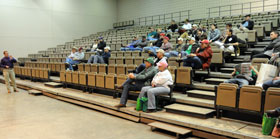
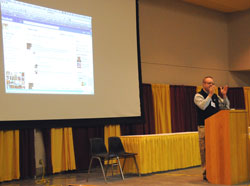
 We really enjoyed a great program during the meeting, starting with a panel discussion on Florida agriculture’s water and fertilizer issues. We also heard from the University of Florida’s Center for Public Issues Education on measuring the effectiveness of social media (more on that later) and from Gary Myers, former owner of Morgan and Myers, about Strategic Thinking on PR.
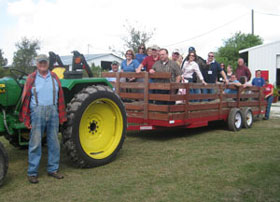
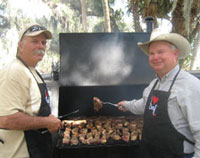 After a sunset dinner cruise on Thursday night, the business meeting was held Friday morning and followed by a great tour arranged by Gary Cooper of Southeast Agnet. The group visited Worden Farms, an 85-acre certified organic family farm in Southwest Florida, and Longino Ranch, a diversified citrus and cattle operation near Arcadia. There we enjoyed a Florida cracker cowboy meal of fresh venison appetizers, perfectly grilled steaks, homemade beans and can’t-get-it-anywhere-else boiled swamp cabbage. Just mmmm, mmmm GOOD!
The ranch was a great example of diversified agriculture and environmental stewardship. Not only do they produce cattle, citrus and timber on the operation, but they also maintain a preserve for endangered gopher tortoises.
Listen to my interview with Mace about the ARC meeting here: Mace Thornton Interview


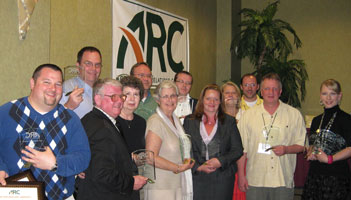 Winners of the
 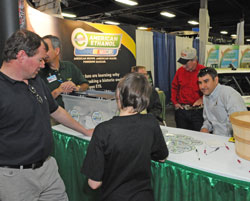 Adam Andrews,