
 The Boehringer Ingelheim Vetmedica Swine Health Seminar in North Carolina offered updates in two important swine health areas – mycoplasma hyopneumoniae and PRRS.
Dr. Erin Strait with Iowa State University talked about getting the most out of diagnostics for M. hyopneumoniae. “The biggest issue I usually see is over-interpretation of diagnostics and not understanding that those diagnostics are often skewed towards false negative,” she said. “Mycoplasma hyopneumonia in live pigs can be pretty hard to detect and the diagnostics tend to be a lagging indicator. Determining prevalence in the nursery stage can be very challenging.”
Listen to my interview with Erin here: Dr. Erin Strait at BIVI Swine Health Seminar
 Dr. Rick Tubbs with Green River Swine Consultants is a practicing vet who serves Tosh Farms, a family-owned hog operation in Tennessee. He presented information on the impact of the modified live PRRS virus vaccine for control of PRRS in an endemically infected continuous flow finish site. He described how they ended up with a PCV2 problem which they dealt with by depopulating finisher sites, moving to a wean-to-finish operation, changing wean age and vaccinating all pigs for PCV2.
“This particular virus disease is a constantly evolving challenge and we have to adapt to meet the challenge,” Rick says. “The PCV2 vaccine is a wonderful product. It’s been one of those home runs in the industry.”
Listen to my interview with Rick here: Dr. Rick Tubbs at BIVI Swine Health Seminar

 “Hog Economics in the Biofuels Era” was the topic of a presentation by Purdue University economist Dr. Chris Hurt at the
  The
The 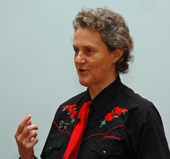 Nobody talks common sense about animal welfare better than Dr. Temple Grandin of Colorado State University.
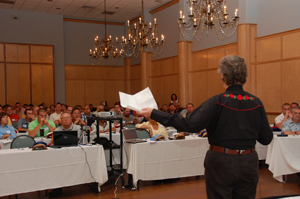 Temple spoke this morning to the
 Participants on this week’s he
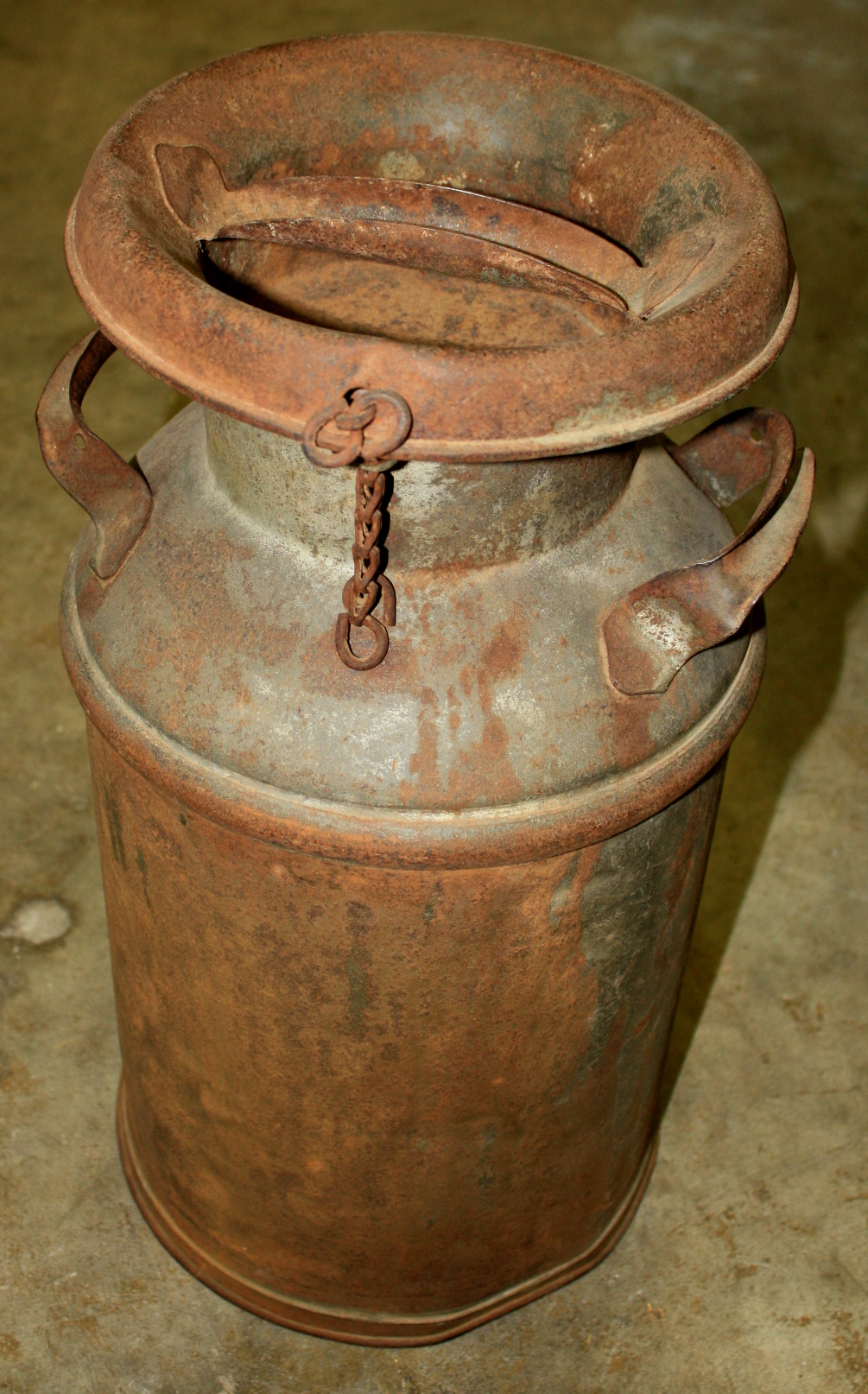
 One stop on the
  Al Bensch, vice president of northern operations for The Andersons Plant Nutrient Group, spoke on one of the three tour buses as we drove past much of the company’s Maumee, Ohio operations. “We have 27 locations in the fertilizer business – Ohio, Michigan, Indiana, Illinois, Wisconsin, Minnesota and Florida,” Al said. “We handled last year a little over two million tons of fertilizer.”
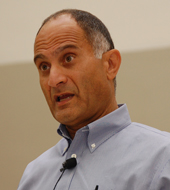 We made a very brief stop at the Anderson family compound where we heard from the Plant Nutrient Group president Denny Addis about the Andersons’ commitment to agriculture and the environment. “Production agriculture and care for the environment are not mutually exclusive, they need to work in harmony together,” he told me in an interview. “We’ve got to continue to find more ways to produce more fiber, more food, more energy for the world at the same time make sure we care for the environment.”