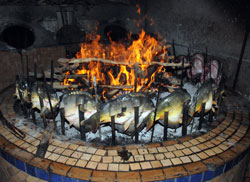
 The political and safety situation in Iraq today is making it very difficult to conduct business within the country, especially for companies and farmers that would like to export U.S. feed grains into the market. However, that’s going to change in the next couple years according to some Iraqi businessmen that the U.S. Grains Council Corn Mission team met with. We met with them over a dinner of Masgouf, which you see cooking around this open pit fire. Masgouf is a traditional Iraq dish of fresh, whole fish that are seasoned with salt, pepper and tamarind and slow cooked on stakes around a fire. The fish used for our meal were carp.
While our Masgouf was cooking I spoke with one of the board members of the Iraq company that was represented at the dinner. He says they have always imported from America. He says American grain is “the best and very clean.” He says the market is somewhat limited right now but will get better in the future. He says that once things stabilize their poultry sector will grow quickly. He enjoyed meeting with American corn growers.
You can listen to my interview with the Iraq businessman below:
 Ron Rush, who works in health and technical services for
 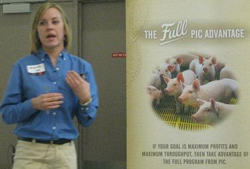 During the
 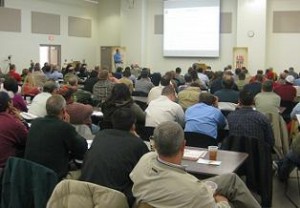 OK, so it’s not exactly how I remember boot camp from my days in the Air Force, but our good friends at
 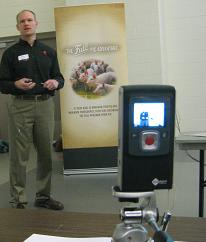 In between sessions, I caught up with Casey Neill, a PIC nutritionist who talked about reducing sow herd feed costs and nutrition programs that maximize performance. He told me that with today’s tight margins, no one can afford to spend too much without getting any more performance.
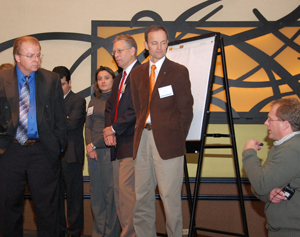 Dr. Bob Rowland with Kansas State University (left) and Dr. Max Rodibaugh (center), a swine practitioner from Indiana, were the last two speakers at the
 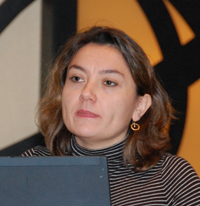 Her name is Dr. Montserrat Torremorell, but most people just call her Dr. Montse (mont-see). She is an international expert in swine health at the University of Minnesota, joining the College of Veterinary Medicine earlier this year as the Al Leman Chair in Swine Medicine. So, she definitely knows her stuff when it comes to porcine reproductive and respiratory syndrome, better known as PRRS.