Just in Case

Melissa Sandfort

Living out in the country, I don’t have the luxury of just running to the grocery store around the corner if I find myself in the middle of a recipe, missing ingredients. The closest grocery store is 10 miles away and it’s no bigger than my kitchen. The next store of any size is 25 miles away and it’s still a drop in the bucket as compared to bigger cities. So our pantry is quite large and I keep multiples of everything on hand.

Did I mention we have three freezers, too? Is that overkill?

Last week though, I ran out of eggs. I had to make a cake for a funeral and that used up the last of my supply. So the next night when we were making French toast and bacon for supper (yes, it’s called supper around here), I sure was missing the side dish of scrambled eggs.

If I had one of these egg cases around – and a few chickens – maybe I wouldn’t have been in that situation. This is a Quality Egg case from Dannen Feeds and it held 12-dozen eggs and had flats and fillers to keep the eggs from cracking.

That’s a lot of busy chickens. And, there was a super-size version of this egg case that held 30-dozen eggs!

Now if only I could convince the grocery store to put in a drive-through window for bread, milk and eggs, we’d be all set.

Until we walk again …

Uncategorized

Zimfo Bytes

Melissa Sandfort

    Zimfo Bytes

  • Ted Haller has accepted the position of Media Director for the Brighton Agency in St. Louis.
  • The new Farm Progress Show app presents a wealth of show information by using the latest technology for smartphones and additional app-compatible hardware. Locate the app in either marketplace by searching for “Farm Progress Show.”
  • The 2011 Summit, sponsored by the Center for Food Integrity, the International Food Information Council and the National Restaurant Association will address the theme, “Food Choices – Challenges – Realities.”
  • A pro-ethanol documentary, “Freedom”, has been released, which gets back to basics about ethanol, noting that it creates jobs, it displaces more polluting fossil fuels and doesn’t take away food from humans.
    Zimfo Bytes

    An Agvocacy 2.0 Wrap Up

    Chuck Zimmerman

    We know Michele Payn-Knoper, Cause Matters, as the founder of the weekly Twitter conversation, AgChat. She’s also on the founding board of the AgChat Foundation and has done more work for it than anyone that I know. But she gives all the credit for what we’ve accomplished as an organization to the board and all the volunteers. Well, sometimes you have to give credit back and I’m doing that here. You’ve done an awesome job Michele and a whole army of agvocates love you for it!

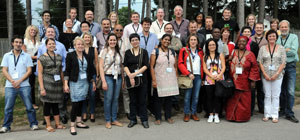
    I visited with Michele at the end of the Agvocacy 2.0 Conference. She gave me a good wrap up of how things went starting with attendance. There were 115 people attending which I believe more than doubles last year’s inaugural conference. The conference is all about training in social media that includes blogging and effectively using social networking. She says that even before the conference new agvocates had started a blog or Facebook page. One of the things that struck her about this year’s conference is the personal connections that were being made since so many of the attendees had never met each other except online. Because of the value of that networking time was extended this year. So in case you missed my interview with Michele which was part of last week’s ZimmCast I’m posting here for you.

    You can listen to my interview with Michele here: Interview with Michele Payn-Knoper

    2011 AgChat Agvocacy 2.0 Conference Photo Album

    AgChat Agvocacy 2.0 coverage is sponsored by The New Holland Boomer 555 Contest.
    Audio

    Recognizing an AgChat AgNerd

    Chuck Zimmerman

    During the Agvocacy 2.0 Conference one of the board members of the AgChat Foundation received some special recognition. He’s John Blue, Truffle Media.

    John says that what drew him to the AgChat Foundation was the hashtag on Twitter, #AgChat. As a media person and now officially an AgNerd he figured out how to archive the weekly Twitter conversations. He also believes in the idea of connecting with consumers to help them better understand where their food comes from. He sees continued growth in farmers becoming agvocates. In the photo John received some special recognition for his supportive efforts of the AgChat Foundation from Michele Payn-Knoper during the conference.

    You can listen to my interview with John here: Interview with John Blue

    2011 AgChat Agvocacy 2.0 Conference Photo Album

    AgChat Agvocacy 2.0 coverage is sponsored by The New Holland Boomer 555 Contest.
    Audio

    Illinois Farm Bureau is Proud GROWMARK Parent

    Cindy Zimmerman

    growmark annual meeting 2011As GROWMARK enters its 85th year, the Illinois Farm Bureau (ILFB) is proud to have watched the cooperative grow into something bigger and better over the years.

    “The GROWMARK system started under the auspices of Illinois Farm Bureau years ago, so we’re kind of the parent of the organization,” said ILFB president Philip Nelson at the cooperative’s annual meeting last week in Chicago. “It’s been successful, they continue to grow in all regions of the country providing goods and services that farmers utilize.”

    Phil conducted the nomination and election of new directors for GROWMARK during the business session. Five of the cooperative’s 16 director seats, established by geographic zone, were elected and will serve three-year terms. Bob Phelps of Rockton, Ill., who has served on the GROWMARK Board since 1997, David Watt of Murrayville, Ill., and Matt Heitz of Farley, Iowa were re-elected to the board. Jack McCormick of Ellis Grove, Ill., and Kim Fysh of Thamesville, Ont. were elected to first terms on the GROWMARK Board.

    You may recall that when President Obama visited Illinois this month, Phil was able to challenge him about the regulations being considered by the federal government that could make it more difficult for farmers to do their jobs. “We’re not asking for a favor but we need some common sense or you’re going to regulate what we think is the biggest industry in the country right out of production,” Phil said he told the president. “I think the president addressed the question somewhat but I think it shows that we need to get further engaged with the EPA so that they better understand what they’re doing.”

    I also asked Phil about the crops in Illinois this season – listen to or download the whole interview here. IL Farm Bureau President Phil Nelson

    2011 GROWMARK Annual Meeting Photos

    Audio, Farming, GROWMARK

    Dale Minyo Speaks at Mavis Farm Stop on CTIC Tour

    Cindy Zimmerman

    It’s always great to see farm broadcasters as featured speakers at events, so it was fun to see our good friend Dale Minyo with the Ohio Ag Net as luncheon speaker at the Conservation Technology Information Center tour August 9 in Northwest Ohio.

    Dale talked about the importance of messaging for agriculture. “Sometimes we’ve got to clear up the message,” he said, using the example of increasing profitability in farming. “The way we’ve been able to make a profit is we’ve become more efficient,” Dale said. “It’s more about efficient, it’s about environmental concerns, it’s about being more effective about what we’re doing.”

    Dale was pleased that the CTIC chose the Ohio region around Lake Erie to showcase some of the important initiatives that farmers are doing.

    Listen to my interview with Dale here: Dale Minyo on CTIC Tour

    The luncheon where Dale spoke was on the Mavis Farm near Edgerton, Ohio. The corn and soybean operation is a fourth generation farm owned by Gary Mavis (pictured) and his wife Pat with son Scott and his wife Jenny. Gary says they follow a corn-soybean rotation on nearly 3,000 acres and divide each field into different yield zones. “We started yield mapping back in ’95 and after a few years of collecting data was able to established yield zones that we felt comfortable with,” he said. “Now we’re applying fertilizer based on those yield zones and we’re varying the rate as we go across the field it might varying 150-200 pounds depending on what the soil test has showed.”

    That results in more efficient use of fertilizer and lime, less pounds applied, and money saved.

    Listen to my interview with Gary here: Gary Mavis on CTIC Tour

    CTIC 2011 Conservation in Action Tour Photos

    AgWired coverage of the CTIC Indian Creek Watershed Field Tour is sponsored by AGROTAIN
    Audio, Conservation, CTIC, Precision Agriculture

    John Deere Goes Way Back With CTIC

    Cindy Zimmerman

    John Deere has been a partner with CTIC since the T stood for Tillage. Now the T stands for Technology, and John Deere’s relationship with the Conservation Technology Information Center is stronger than ever.

    “John Deere was a founding member with CTIC back in 1982,” said John Deere product manager Pauley Bradley on the recent CTIC 2011 Conservation in Action Tour. “John Deere needed a partner where education was required.”

    Pauley says CTIC and John Deere have evolved together over the years. “In 1986, there was the realization that conservation was going beyond tillage that that’s when it was re-named the Conservation Technology Information Center,” he said. “And that’s when we started focusing on other aspects of farming besides just seeding and tillage.”

    Listen to my interview with Pauley here: John Deere's Pauley Bradley on CTIC Tour

    John Deere Solutions Specialist Kim Fletcher gave participants on the bus tour a little pop quiz about the history between John Deere and CTIC – watch it below and see if you know the answers!

    CTIC 2011 Conservation in Action Tour Photos

    AgWired coverage of the CTIC Indian Creek Watershed Field Tour is sponsored by AGROTAIN
    Audio, Conservation, CTIC, John Deere, Video

    Meeting The Twittering Farmer

    Chuck Zimmerman

    He’s known as The Twittering Farmer. He’s @Tykerman1 or rather Steve Tucker. You know someone on Twitter by their handle and sometimes it gets difficult to call them by their real name!

    I “met” Steve via Twitter and enjoyed how he handled himself on a CNN interview and them talked with him myself. That was over two years ago. But I had not met Steve until the AgChat Foundation’s Agvocacy 2.0 Conference. So I visited with Steve to see what he thinks about the development of “agvocacy.” In the pic I’m sure Steve is busy cranking out a tweet. You can see what happened if you check out the conference hashtag – #ACFC11.

    You can listen to my interview with Steve here: Interview with @Tykerman1

    2011 AgChat Agvocacy 2.0 Conference Photo Album

    AgChat Agvocacy 2.0 coverage is sponsored by The New Holland Boomer 555 Contest.
    Audio, Social Networking

    Difference Between Herbicide Tolerance and Resistance

    Cindy Zimmerman

    weeds mare's tailThe problem of resistant weeds, especially glyphosate-resistant broadleaf weeds, continues to become more worrisome, but some weeds have always had a tolerance for certain weed killers.

    BASF Herbicide Technical Market Manager Dr. Dan Westberg says there’s is a difference between resistant weeds and tolerant weeds. “Tolerant weeds are ones that a herbicide never really controlled in the first place,” Dan explains. “If you look as species like wild buckwheat, morning glory, day flower – those types of weeds were never really controlled very effectively with glyphosate.”

    BASF at AMS11Resistance is different because it develops over time. “With resistant weeds, you’ve gone from getting essentially total control of a population to selecting a biotype, or individual weed that has the ability to tolerate that herbicide,” and Dan says those resistant biotype populations can then expand and dominate in a field.

    Dan notes says there are several mechanisms within a plant that can lead to resistance. Listen to him explain here: Dan Westberg on weed resistance

    Dan recommends that growers use a combination of chemical, cultural and mechanical strategies to lower the risk of developing resistance and tailor their weed management approach to the weed populations that exist in particular fields. Dan Westberg on lowering risk

    He encourages growers if they see escapes not attributable to sprayer skip or a mixing problem to work with a local extension agent or university weed scientist to collect seed from the weed and have it tested for resistance.

    Audio, BASF

    John Deere R Series Tractors Overview

    Chuck Zimmerman

    In the big John Deere product launch this week there were a lot of tractors to look at. I visited with Brad Tolbert and Jarrod McGinnis about what new features are being offered on the lineup of 6/7/8/9 R Series models. Pictured is a 9510 R tractor on the demo track.

    According to Brad, John Deere has increased the cab size on the 6R Series by twenty percent and upped the hydraulics capacity and are offering new loaders to make it a very versatile tractor. He says the company will start building them in January.

    Jarrod says the 7R Series is a totally new tractor. They started with a blank slate and built it according to what customers were asking for. For example, the new cab is basically what you only saw on an 8R Series tractors previously. The cabs on the 7/8/9 Series are now the same which makes things easier for operators who have to get in and out of different models.

    You can listen to my interview with Brad and Jarrod as they review other features, including horsepower here: Overview of New John Deere Tractors

    2011 John Deere Product Launch Photo Album

    Audio, John Deere, Tractor