
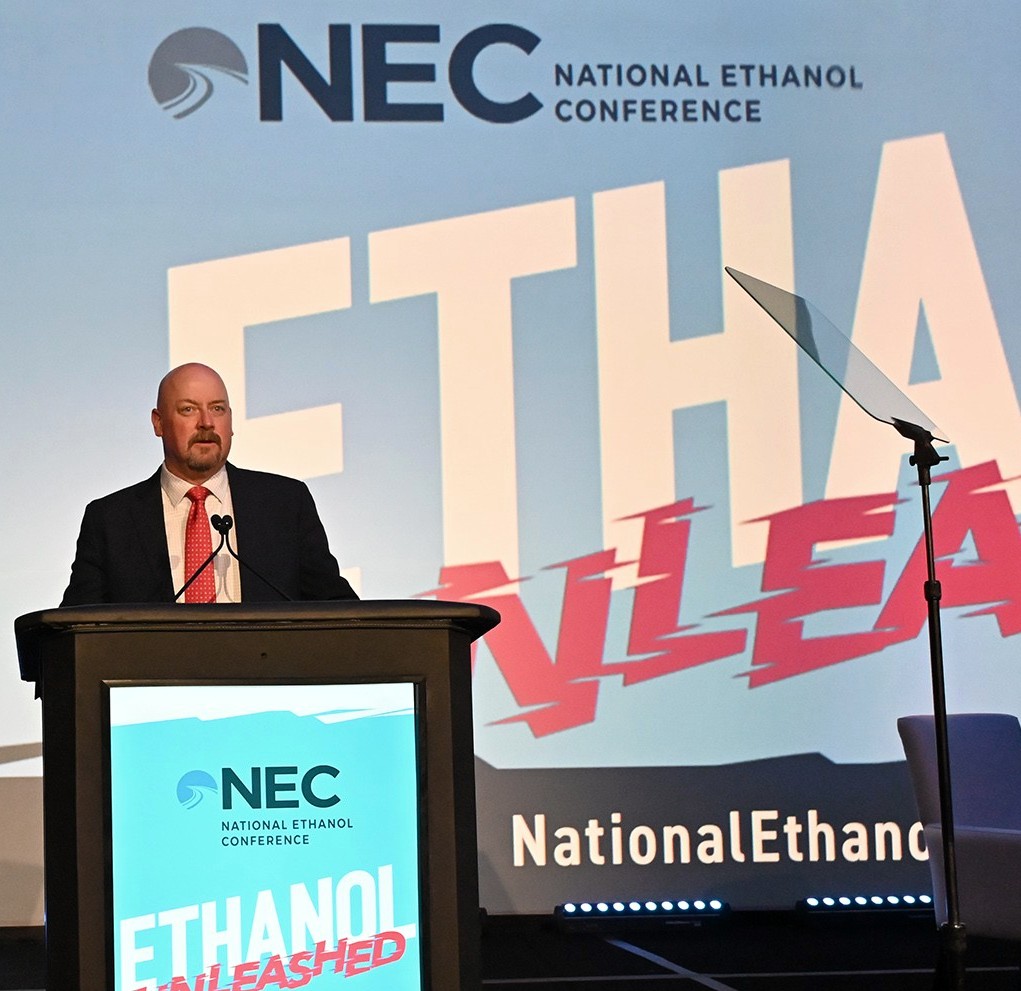
 In a rousing address at the 2026 National Ethanol Conference this morning, Renewable Fuels Association (RFA) President and CEO Geoff Cooper drew parallels between the ethanol industry’s untapped potential and the inspiring underdog story of college football quarterback Fernando Mendoza. Cooper likened the sector to the overlooked athlete who, given the chance, achieved extraordinary success – a metaphor for ethanol’s readiness to “be let off the leash” amid regulatory hurdles.
Reflecting on 2025 achievements, Cooper highlighted record-breaking production of 16.4 billion gallons of ethanol, up 200 million from the prior year. The industry also produced 35 million metric tons of high-protein animal feed and 4.7 billion pounds of distillers corn oil, supporting 13 billion pounds of red meat and 575 million gallons of bio-based diesel. Carbon capture reached a new high of 3.3 million tons, with growing sequestration efforts. Demand surged, with domestic consumption at 14.3 billion gallons – the highest in six years – and an average gasoline inclusion rate of 10.5%. Exports hit a record 2.2 billion gallons, shipped to over 80 countries, representing one in eight gallons produced.
“We saw glimpses of our industry’s potential last year, and 2025 was another good year for the U.S. ethanol industry,” Cooper said. “But we could have done so much more, if simply given the opportunity. More to lower fuel prices for consumers. More to reduce reliance on imported petroleum. More to clean up the air and reduce emissions. And more to create jobs and boost the farm economy.”
That opportunity, RFA emphasized, begins with eliminating outdated federal regulations that restrict E15 sales during the summer driving season. Despite bipartisan support and a broad coalition agreement that included the American Petroleum Institute, legislative efforts to secure permanent, nationwide year-round E15 sales narrowly failed in late 2024 and again in early 2026. And instead of adopting year-round E15, the House formed the E15 Rural Domestic Energy Council” to continue working on the issue.
House lawmakers serving on the council had pledged legislative action on year-round E15 by today, but as of this morning, no bill had been introduced. Cooper called on members of Congress to act swiftly, stressing that year-round E15 would lower fuel costs, strengthen U.S. energy security, and provide critical economic relief to farmers and working families. Cooper noted that a small handful of mid-sized refining companies is holding up progress on E15 and reform of the RFS program’s small refinery exemption (SRE) program. He said lawmakers are finding out “that there is simply no way to appease mid-sized refiners who continue to game the RFS system with SREs. Those refiners either want to maintain the status quo, or they want to blow up the RFS entirely—neither of those options is acceptable to the majority of liquid fuel and agriculture stakeholders.”
“Our message to the Council—and to every member of Congress—is clear: Year-round, nationwide E15 is an urgent priority for America’s farmers, energy sector, and working families—and it can’t wait any longer. Unleash E15! Let’s get it done,” Cooper said.
He encouraged all members of the RFA and the ethanol industry in general to contact their members of Congress and urge them to pass E15 legislation.
Read Cooper’s remarks here and listen to the entire address below:
NEC26 State of the Industry (37:37)