
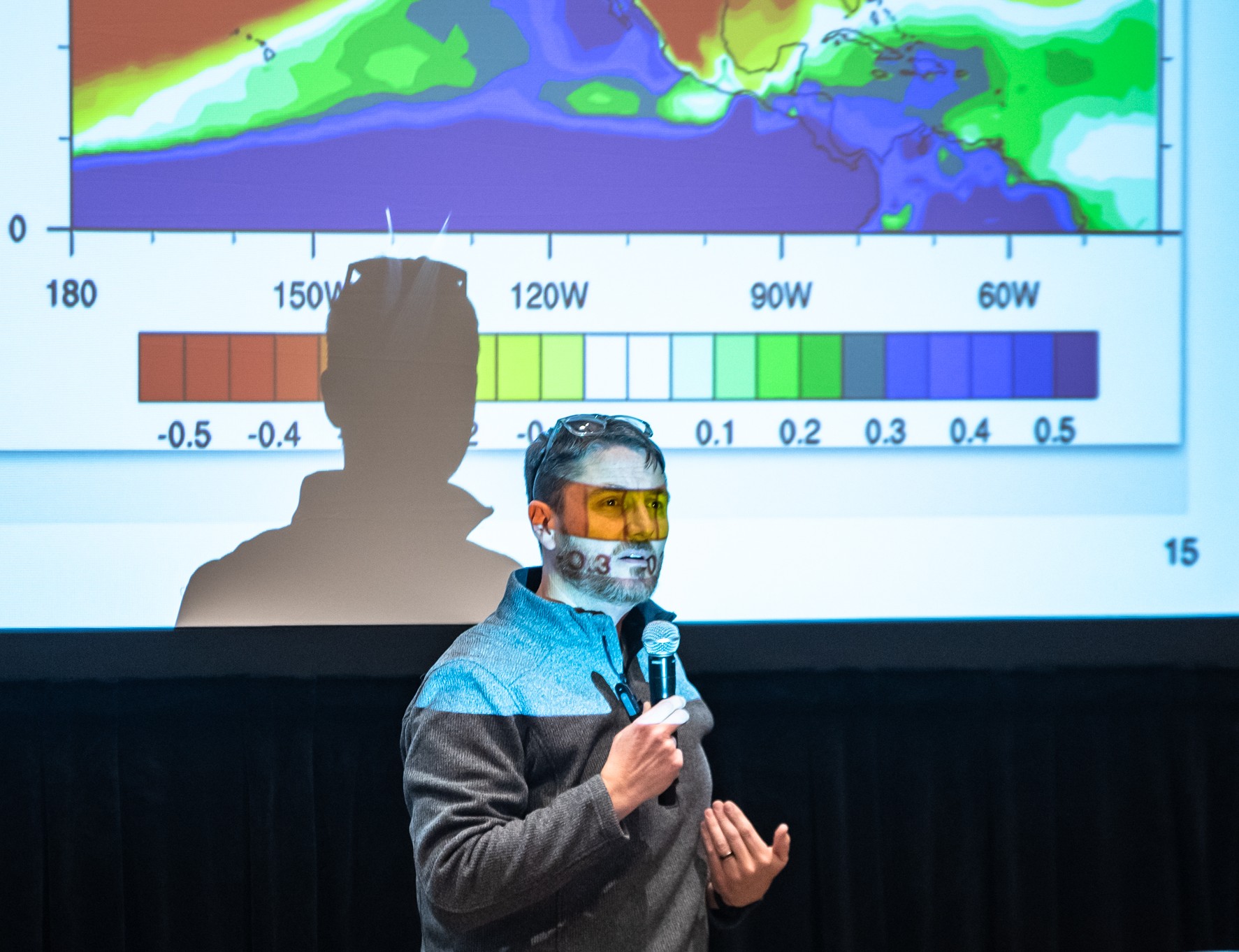
 While much of the southern Cotton Belt is in a deep freeze right now, the big concern in the forecast for this season is drought and heat.
Eric Snodgrass of Nutrien Ag Solutions told cotton growers at the 2026 Beltwide Cotton Conferences that much of the weather risk facing the Cotton Belt in 2026 can be traced to the Pacific Ocean—specifically the ongoing influence of La Niña. Right now, that pattern is working against the southern U.S., keeping the jet stream north and leaving much of Texas, the Delta, and the Southeast drier than normal during winter and early spring.
Snodgrass explained that La Niña winters typically limit moisture recharge across the Cotton Belt, and that’s exactly what’s happening this season. “If you wanted to start 2026 without worrying about drought, you’d want the jet stream coming out of Hawaii,” he said. “That’s what El Niño does. La Niña does the opposite.” The result has been persistent dryness, low river levels along the Mississippi, and limited opportunities to rebuild soil moisture before planting.
Looking ahead, there is some cautious optimism. Forecast models suggest La Niña may weaken and transition toward El Niño by late spring or early summer. That shift would improve moisture prospects in parts of the country, but Snodgrass stressed that El Niño alone does not guarantee summer rainfall for cotton. ENSO patterns matter most in winter, not midsummer.
For summer, the biggest risk factor is the position of high pressure—especially whether the Bermuda High shifts west into Texas, creating what meteorologists call a “Texas Ridge.” When that happens, heat and drought dominate across the Cotton Belt. “Ridges ultimately dictate the pattern of the atmosphere,” Snodgrass said, noting that this setup can shut down rainfall even in otherwise favorable years.
Severe weather remains another concern this spring, particularly across the Delta and Mid-South, where tornado and hail risks have increased in recent years. Snodgrass emphasized that growers should stay flexible and monitor changing patterns closely. “All of this can change rapidly,” he said, underscoring that ocean temperatures and atmospheric ridges—not long-range forecasts—will ultimately decide how the 2026 cotton season unfolds.
Listen to the full presentation:
Eric Snodgrass, Nutrien Ag Solutions - presentation 45:35