
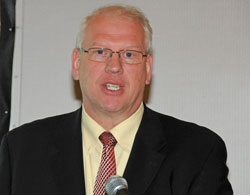
 Biofuels like ethanol and biodiesel weren’t the only energy alternatives on the program at the Farm Foundation Transition To A Bio Economy Conference. We also had a presentation on wind energy from Mark Willers, Minwind Energy.
Mark says Minwind Energy was formed by a group of local farmers and businessmen in southwest Minnesota. He’d like people to understand that the electrical grid in the United States needs to be upgraded due to continuing increases in the use of electricity and how that is accomplished and funded is going to be an important issue. He thinks Americans want and need an energy policy that’s focused on efficiency. He says that Congress has extended production tax credits for wind turbines and that’s been helpful.
I thought he made some interesting points about how much news and discussion focuses on liquid fuel like gasoline when the largest energy use in America is from electricity. This is the sector of energy use that wind makes its contribution into.
You can listen to my interview with Mark here: ff-global-09-willers.mp3
You can download the interview with this link (mp3).
You can find photos from the conference here:
Transition To A Bio Economy Conference: Global & Trade Issues Photo Album
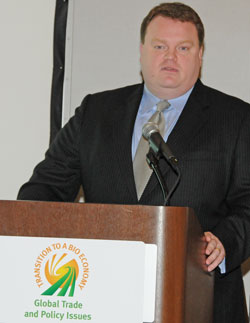 The legislative guru for the
  Here’s a call to action to help Steve Drake out. He’s doing a
 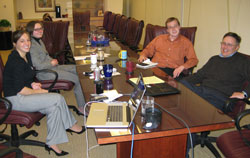 Here’s my happy group of social media students at the U. S. Grains Council office in Washington, DC.
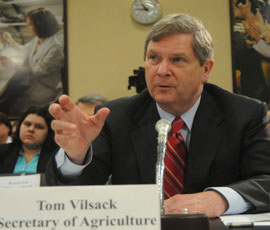 Then, he testified before the House Appropriations Subcommittee on Agriculture about the Administration’s plans to bring reform to USDA and discussed how the President’s budget will revitalize rural America. During his testimony, the secretary used the opportunity to make three announcements of actions being taken to help producers struggling with the recent downturn in commodity prices.
 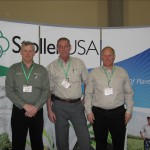 While attending this year’s Commodity Classic, I had a chance to talk with Ed Shoup of Shoup Brothers Farms, who has both a hog operation and grows corn in Orville, Ohio, to chat about some of the ways he is increasing yields. He is pictured here on the left in the Stoller booth with Dan Denman of Cortland, OH and Steve Wiser of Carlton, PA. Ed was kind enough to let me in on a few of his secrets. His first line of defense is
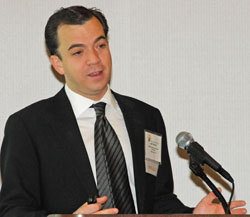 I think Joel Velasco, Brazilian Sugarcane Industry Association, had the quote of the day here at the Farm Foundation Transition To A Bio Economy Conference.
 A new website is helping to spot the latest job opportunities in agribusiness.
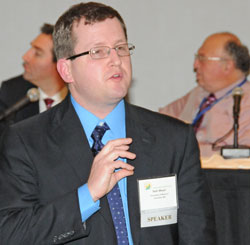 Seth Meyer is with the Food and Agricultural Policy Research Institute (FAPRI). He’s also a speaker here at the Farm Foundation’s Transition To A Bio Economy Conference.